If you are researching how to start a business in Morocco, the short answer is this: yes, foreigners can own 100 percent of a company in most sectors, the process is centralized through the Regional Investment Centers, setup usually takes between 3 and 7 days if structured correctly,and total incorporation costs typically depend on complexity.
The long answer is what this guide covers.
Starting a company in Morocco is not difficult. But structuring it correctly, planning tax exposure, understanding banking compliance, and anticipating regulatory requirements in 2026 requires preparation. This guide walks you through the legal structures, step by step registration process, full cost breakdown, tax system, foreign investor rules, and common mistakes most entrepreneurs only discover after they have already incorporated.
If you are serious about investing in Morocco, read this carefully.
Table Of Contents
- Why Start a Business in Morocco in 2026?
- Can Foreigners Start a Business in Morocco?
- Choosing the Right Company Structure in Morocco
- Step by Step: How to Register a Company in Morocco
- How Much Does It Cost to Start a Business in Morocco?
- Corporate Tax and Ongoing Compliance in Morocco
- Hidden Costs and Common Mistakes Foreign Investors Make
- Is Morocco Truly Business Friendly?
- When Should You Use a Consultant?
- Frequently Asked Questions
- Final Thoughts
- How Neo Expertise Helps You Structure It Properly From Day One
Why Start a Business in Morocco in 2026?
Morocco has positioned itself as a strategic gateway between Europe and Africa. With over 50 free trade agreements, strong infrastructure such as Tangier Med Port, and growing industrial ecosystems, the country attracts manufacturers, service companies, tech startups, and holding structures.
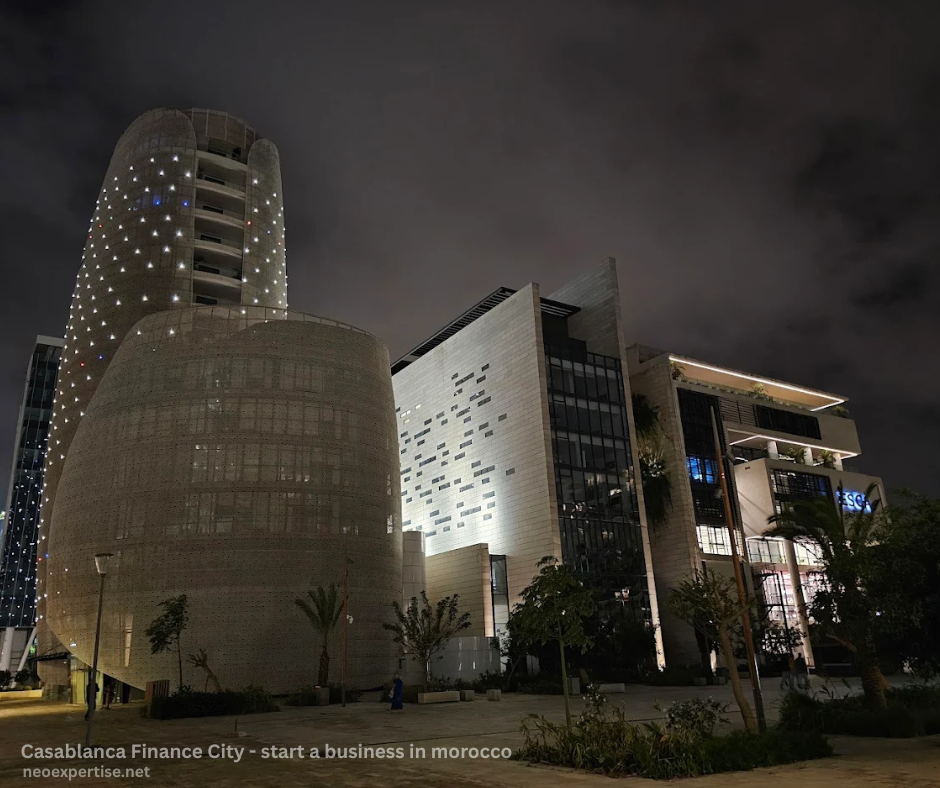
Projected GDP growth for 2026 remains around 3 to 3.5 percent, driven by renewable energy, automotive, agribusiness, tourism, and digital services. Casablanca remains the financial hub, while Tangier and Kenitra dominate industrial production. Casablanca Finance City offers a special regime for financial and export-oriented services.
Strategic Advantages
- Proximity to Europe. Spain is only 14 kilometers away.
- Access to African markets through trade agreements.
- Competitive corporate tax compared to many EU jurisdictions.
- Free zones with tax incentives for export businesses.
- 100 percent foreign ownership allowed in most industries.
But There Are Realities
- Administrative procedures require accuracy.
- French and Arabic dominate official documentation.
- Banking compliance and AML checks are stricter in 2026.
- Digital systems are improving but still require correct structuring.
Morocco is business friendly. But it rewards preparation.
Can Foreigners Start a Business in Morocco?
Yes. Foreign investors can fully own a Moroccan company in most sectors.
There is no requirement for a Moroccan partner in general commercial, industrial, consulting, tech, trading, or service activities. However, some sectors such as agriculture, certain media activities, and regulated industries may require additional approvals or partnership structures.
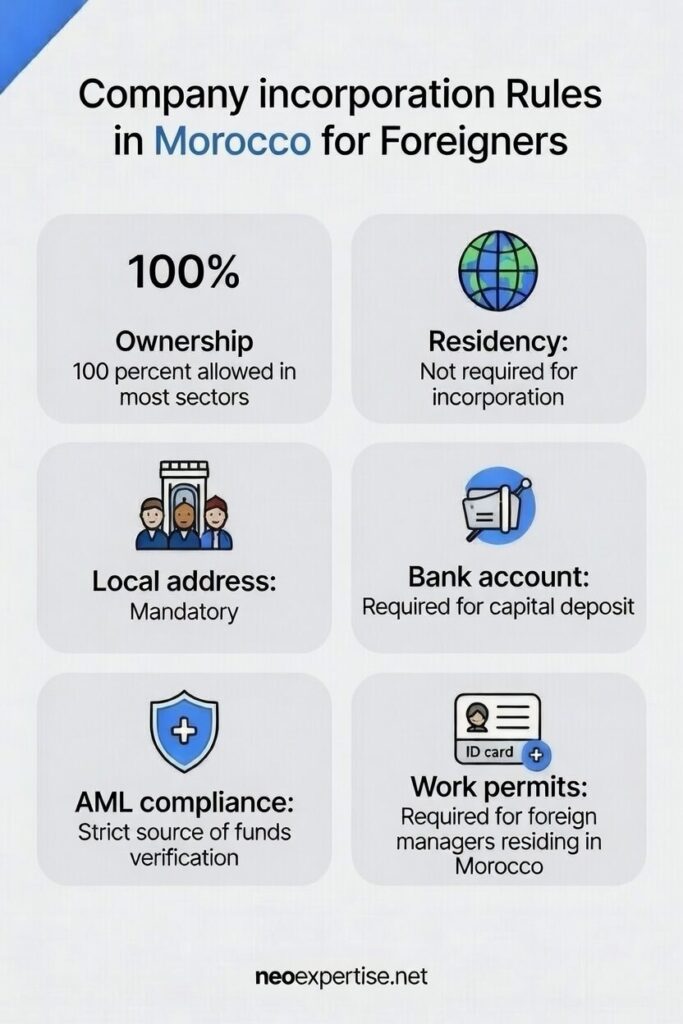
Foreign Investor Snapshot 2026
- Ownership: 100 percent allowed in most sectors
- Residency: Not required for incorporation
- Local address: Mandatory
- Bank account: Required for capital deposit
- AML compliance: Strict source of funds verification
- Work permits: Required for foreign managers residing in Morocco
Foreigners can incorporate remotely through a representative. Residency becomes relevant only if you plan to live in Morocco long term and apply for a residence card.
Choosing the Right Company Structure in Morocco
Selecting the correct legal form is one of the most important decisions. The structure impacts taxation, governance, liability, and banking perception.
Below is a strategic comparison of the main structures.
Company Structure Comparison
| Structure | Minimum Capital | Tax Rate | Best For | Liability | Setup Time |
|---|---|---|---|---|---|
| SARL | No legal minimum. Practical threshold 10,000 MAD | 20 to 31 percent | SMEs, foreign investors | Limited | 3 to 7 days |
| SA | 300,000 MAD | 20 to 31 percent | Large corporations | Limited | 3 to 7 days |
| SAS | No strict minimum | 20 to 31 percent | Startups, flexible governance | Limited | 3 to 7 days |
| Branch | None | Parent rate plus branch rules | Foreign expansions | Parent liable | 3 to 7 days |
| Sole Proprietorship | None | Personal income tax up to 38 percent | Freelancers | Unlimited | 3 to 7 days |
Why SARL Is Most Common
The SARL is equivalent to an LLC. It requires at least one shareholder and one manager. The manager can be non resident. It offers limited liability and flexible governance. For most foreign SMEs and trading companies, SARL remains the default choice.
When to Consider SA
If you plan to raise capital, issue shares, or build a large public structure, SA is more appropriate. It requires higher capital and stricter governance.
When to Consider a Branch
If you want direct extension of an existing foreign entity without creating a new legal personality, a branch may be suitable. However, the parent company remains fully liable.
Step by Step: How to Register a Company in Morocco
The process is centralized through the Regional Investment Centers. Many steps are digital in 2026.
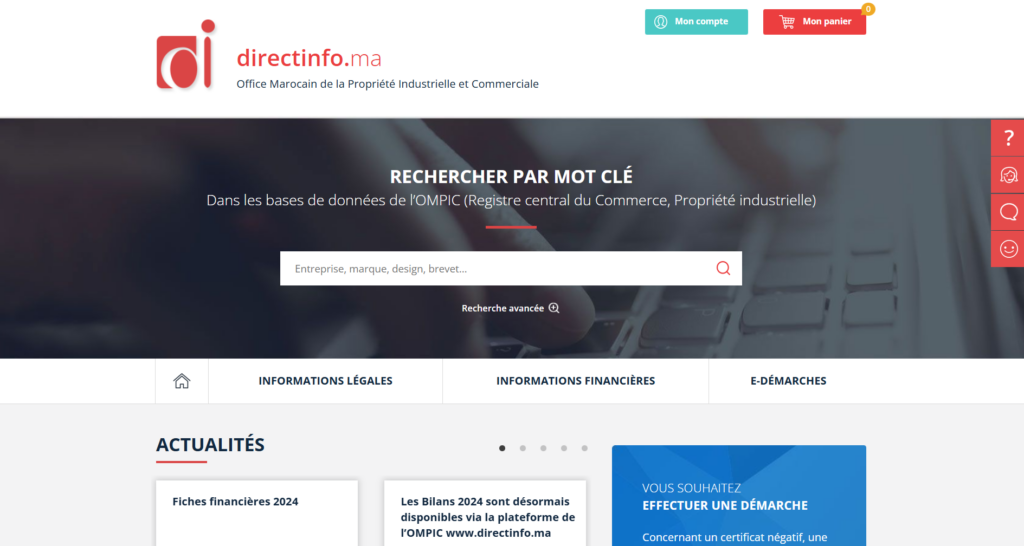
Step 1: Reserve the Company Name
Apply for the negative certificate through OMPIC.
Cost: approximately 230 to 250 MAD
Timeline: 24 to 48 hours
Tip: Verify trademarks before submission.
Step 2: Secure a Registered Office
Every company must have a Moroccan address.
Options include:
- Leasing office space
- Using a domiciliation service
- Co working spaces
Domiciliation typically ranges between 1,000 and 6,000 MAD per year. Lease contracts must be registered with tax authorities.
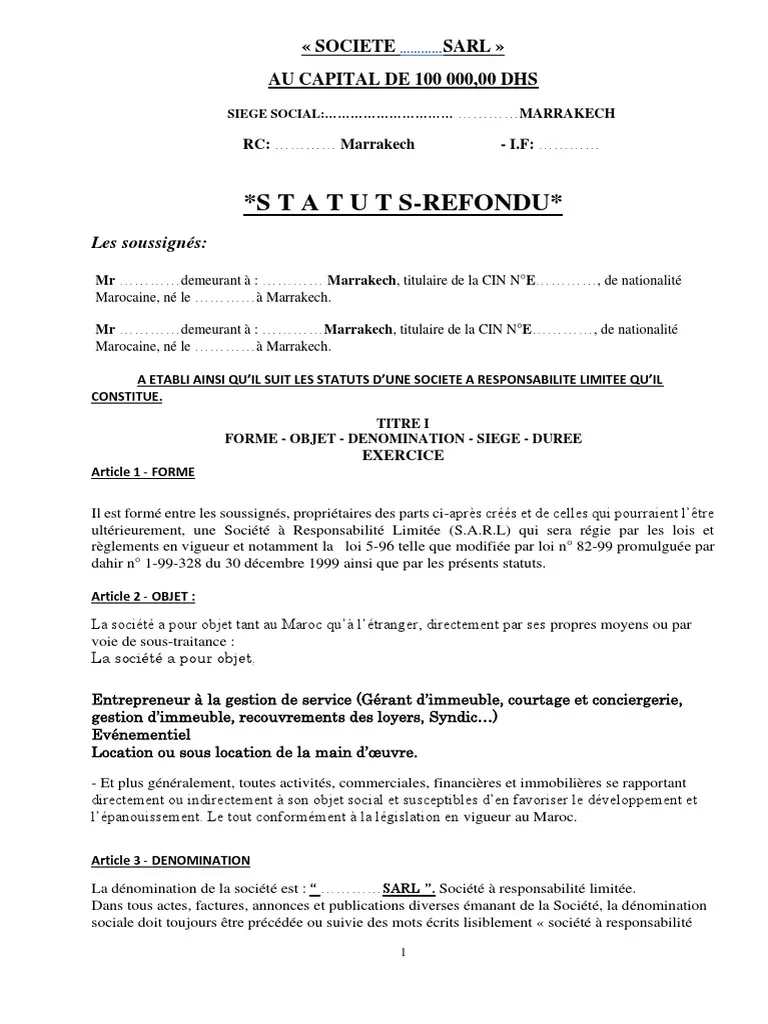
Step 3: Draft the Articles of Association
The statutes must be prepared in French or Arabic.
Legal drafting costs are assessed based on the company’s structure, sector, and compliance requirements.
Foreign shareholders may require document translation and legalization.
Step 4: Deposit Share Capital
Open a provisional bank account.
For SARL, there is no strict legal minimum, but banks often expect around 10,000 MAD. If capital exceeds 100,000 MAD, at least 25 percent must be deposited initially.
Bank fees typically range between 200 and 500 MAD.
Step 5: Submit to the CRI
Documents submitted include:
- Negative certificate
- Statutes
- Shareholder identification
- Address proof
- Capital deposit certificate
The CRI issues:
- Trade Register
- Tax ID
- Professional tax registration
Timeline: 5 to 7 days if complete.
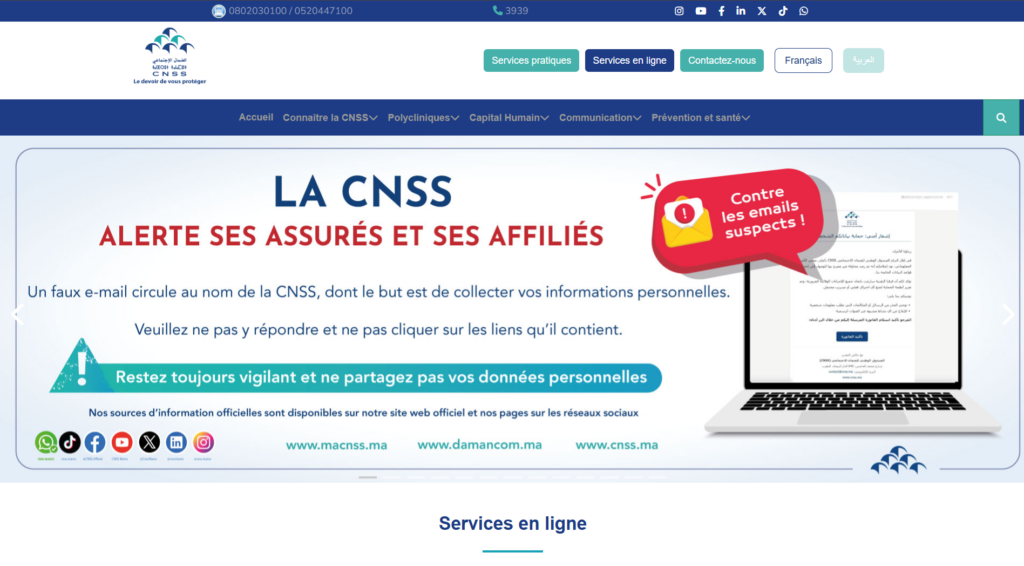
Step 6: Tax and Social Registration
VAT registration becomes mandatory once a company exceeds the legally defined turnover threshold. CNSS registration is required when hiring employees.
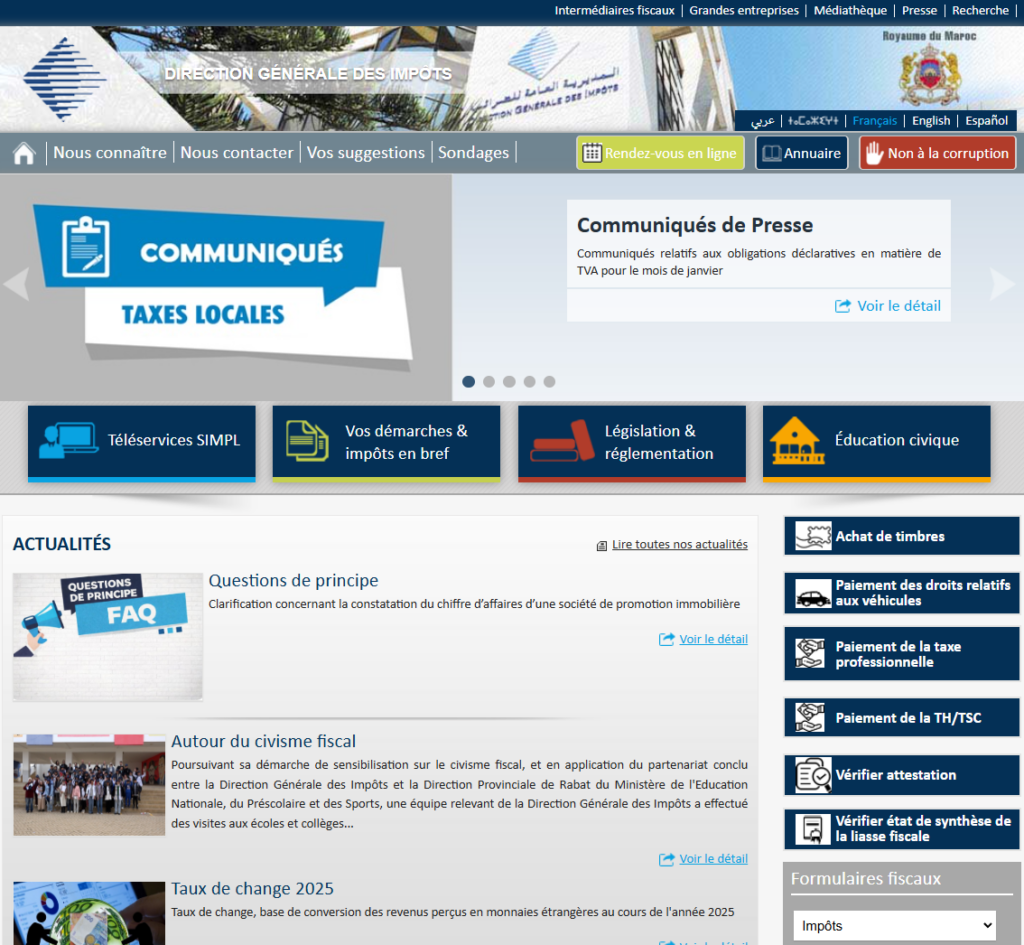
Step 7: Final Bank Account and E Invoicing
Convert the provisional account to permanent. Obtain company stamps.
New in 2026: Electronic invoicing will become mandatory for B2B transactions. Companies must integrate compliant software.
Incorporation Timeline Overview
Day 1 to 2: Name reservation
Day 3 to 7: Drafting and capital deposit
Day 3 to 7: CRI submission
Day 3 to 7: Registration complete
With proper coordination, incorporation can be completed in 7 days .
How Much Does It Cost to Start a Business in Morocco?
Cost is one of the most searched aspects.
Below is a realistic breakdown for 2026.
| Category | Estimated Cost (MAD) | Notes |
|---|---|---|
| Name Reservation | 230 to 250 | OMPIC |
| Legal Drafting | Variable | Notary or lawyer |
| CRI Fees | Variable | Registration |
| Bank Fees | Variable | Capital deposit |
| Legal Announcements | Variable | Gazette and newspaper |
| Domiciliation | 1,000 to 6,000 per year | Address |
| Translations | Variable | Foreign investors |
| E Invoicing Setup | Variable | Software integration |
Total Estimated Setup
Incorporation costs vary depending on the company’s structure, sector, and level of legal complexity.
Ongoing accounting services depend on the transaction volume, reporting requirements, and the complexity of tax obligations.
Full consultant services are priced based on the scope of advisory support, regulatory structuring, and the level of strategic involvement required.
Corporate Tax and Ongoing Compliance in Morocco
Understanding tax before incorporation is essential.
Corporate Tax
- 20 percent for profits below certain thresholds
- Up to 31 percent for higher brackets
VAT
- Standard rate: 20 percent
- Mandatory registration if turnover exceeds 500,000 MAD.
Professional Tax
Based on business activity and location.
Social Security
Mandatory contributions for employees through CNSS.
Free Zone Regime
Export companies in approved zones can benefit from:
- 0 percent corporate tax for first 5 years
- Reduced rate afterward
Casablanca Finance City
Eligible companies may benefit from reduced export taxation.
Tax planning should be done before incorporation, not after.
Hidden Costs and Common Mistakes Foreign Investors Make
Most problems arise from poor preparation.
Choosing the Wrong Structure
Many investors choose SARL by default without analyzing long term capital plans.
Ignoring AML Source of Funds
Banks in 2026 apply stricter anti money laundering checks. Unclear capital origins can delay registration.
Underestimating Translation and Legalization
Foreign documents must be properly apostilled and translated.
Not Planning Tax Before Setup
Tax optimization must be structured in statutes and activity codes from the beginning.
Banking Delays
Opening bank accounts can take longer if documentation is incomplete.
Is Morocco Truly Business Friendly?
The honest answer is yes, but structured.
Advantages
- Political stability
- Strategic geography
- Ownership flexibility
- Competitive costs
Challenges
- Language barrier
- Administrative precision required
- Banking scrutiny
Morocco rewards serious investors, not rushed incorporations.
When Should You Use a Consultant?
You should consider professional advisory if:
- Shareholders are in multiple countries
- Capital exceeds 500,000 MAD
- Free zone or CFC regime is planned
- Industrial or regulated activity
- You want tax optimization from day one
Strategic structuring at incorporation stage prevents costly restructuring later.
Frequently Asked Questions
How long does it take to start a business in Morocco?
Typically 3 to 7 days if documents are complete.
Can I start remotely?
Yes, through a legal representative.
Do I need a Moroccan partner?
No, except in restricted sectors.
What is the minimum capital?
No strict legal minimum for SARL, but banks often expect around 10,000 MAD.
What taxes will my company pay?
Corporate tax between 20 and 31 percent, VAT 20 percent, plus social contributions if hiring employees.
Final Thoughts
Starting a business in Morocco in 2026 is straightforward if structured correctly. The process is centralized, costs are competitive, and foreign ownership is widely permitted.
But successful incorporation is not about filing documents. It is about selecting the correct legal structure, planning taxation, ensuring banking compliance, and anticipating digital obligations such as e invoicing.
Morocco offers opportunity. Preparation determines outcome.
If you are evaluating a serious investment, structuring correctly from the beginning is not optional. It is strategic.
How Neo Expertise Helps You Structure It Properly From Day One
Starting a business in Morocco is procedural.
Structuring it correctly is strategic.
Many investors can complete registration alone. Fewer understand how to:
- Choose the optimal legal form based on future expansion
- Structure shareholding for tax efficiency
- Align activity codes with long-term business plans
- Prepare capital documentation to avoid AML delays
- Anticipate VAT and corporate tax impact before the first invoice
- Integrate e-invoicing compliance from the start
- Evaluate free zone vs standard regime vs CFC status
This is where Neo Expertise operates differently.
Neo Expertise is not a document filing service.
It is a strategic advisory partner for foreign investors entering Morocco.
We assist with:
- Pre-incorporation structuring
- Legal form selection and governance design
- Tax modeling and scenario planning
- CRI coordination and compliance supervision
- Bank preparation and capital documentation
- Free zone and incentive eligibility analysis
- Ongoing tax and regulatory alignment
Instead of simply registering your company, we ensure it is structured to scale, compliant from day one, and aligned with your international objectives.
Because in Morocco, the real risk is not starting a business.
The real risk is starting it incorrectly.
Brahim Rami | Member of institute of chartered accountants in Morocco
He is a CPA and tax advisor, founder of NeoExpertise.net, a Legal and Tax firm helping foreign companies with business setup, due diligence, payroll, and tax compliance in Morocco and Africa.