
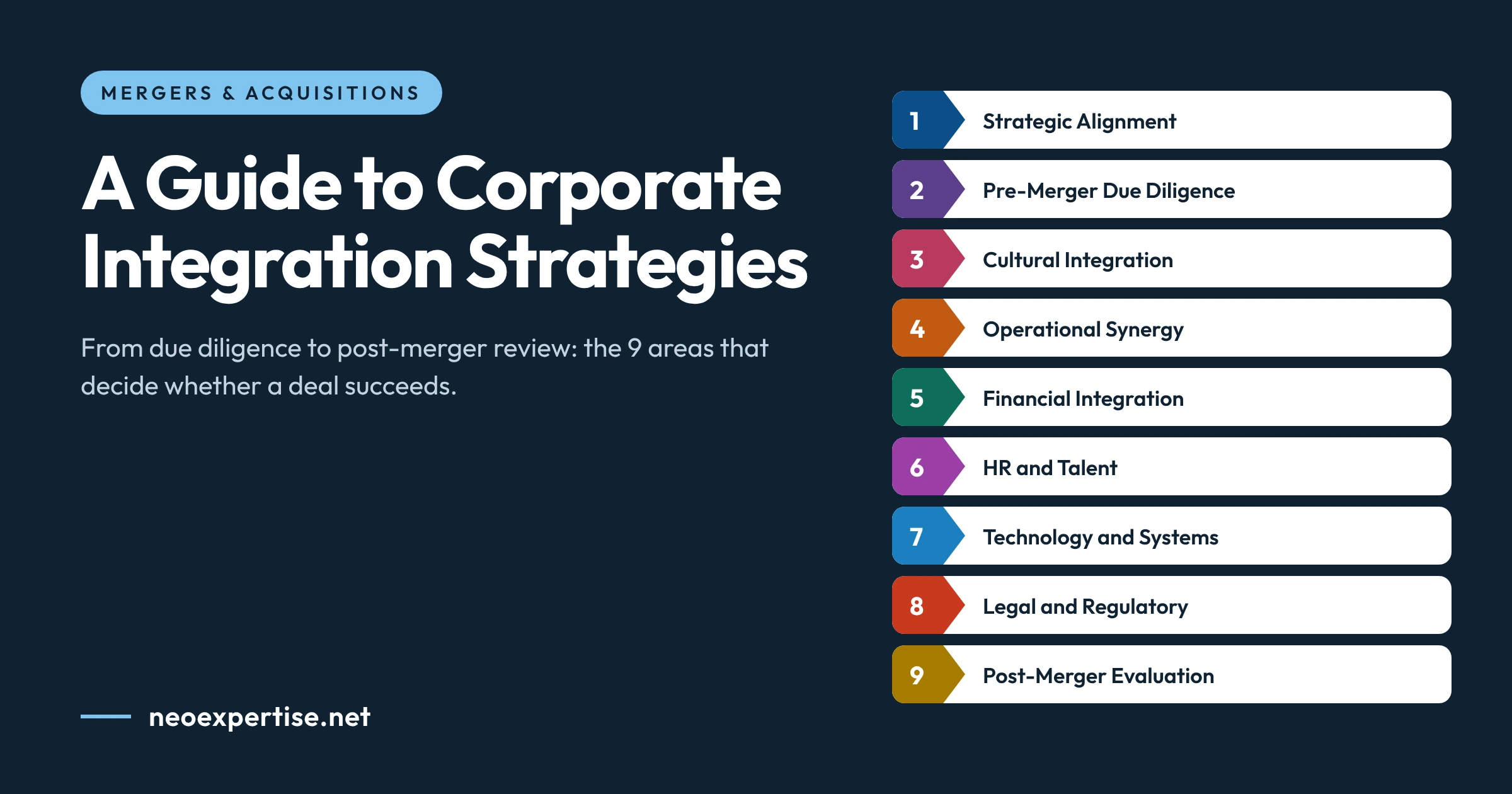
Corporate Integration. Mergers and Acquisitions: A Guide to Corporate Integration Strategies
1. Understanding Corporate Integration
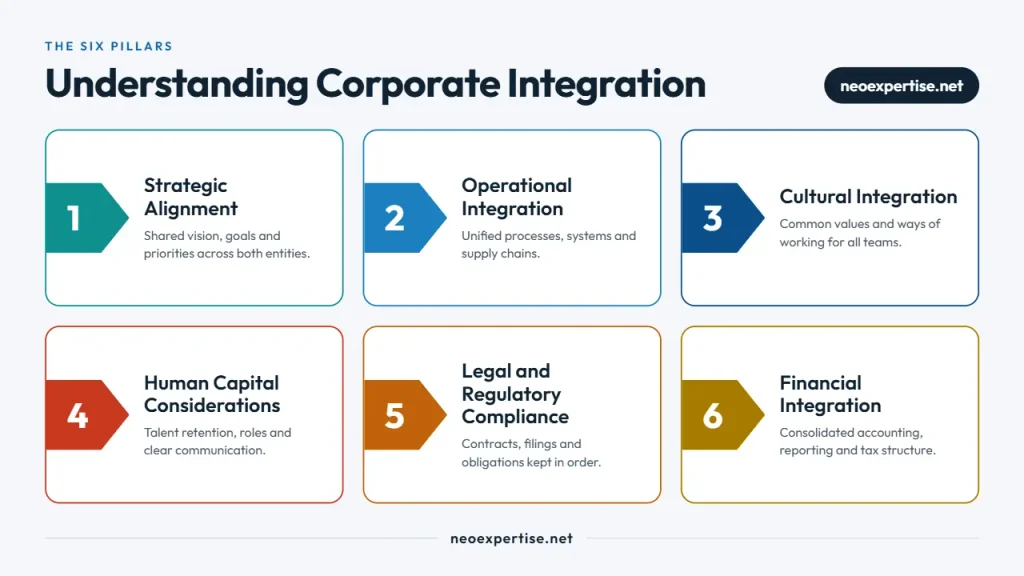
Corporate integration is a multifaceted process that lies at the heart of mergers and acquisitions (M&A). It spans a range of strategic, operational and cultural considerations that organizations must work through when they join forces. In this section, we take a closer look at the nuances of corporate integration, examine its various dimensions and highlight the critical factors that drive successful post-merger outcomes.
1. Strategic alignment:
At its core, corporate integration is about aligning the strategic objectives of the combining businesses. This involves assessing synergies, identifying complementary strengths and defining a shared vision for the newly formed organization. Strategic alignment ensures that the M&A deal serves a purpose beyond mere financial gain.
– Example: When Company A acquires Company B, it may integrate the two product portfolios to create a comprehensive suite of offerings. Strategic alignment here means combining Company B’s technological expertise with Company A’s market reach.
2. Operational integration:
Operational integration focuses on streamlining the processes, systems and functions of the combined businesses. This involves harmonizing supply chains, optimizing production and achieving cost efficiencies. Seamless integration minimizes disruption and boosts overall productivity.
– Example: Following a merger, Company C consolidates its manufacturing facilities, centralizes procurement and standardizes inventory management. Streamlining operations in this way delivers cost savings and greater agility.
3. Cultural integration:
Cultural fit is often underestimated, yet it is critical to a successful integration. Organizations with different cultures must find common ground in order to foster collaboration, trust and employee engagement. Culture clashes can erode productivity and destroy value.
Example: Company D, known for its innovative and flexible working environment, acquires Company E, whose culture is more hierarchical. To integrate successfully, they invest in cross-cultural training, open communication channels and joint team-building activities.
4. Human capital considerations:
People are the lifeblood of any organization. Corporate integration involves managing talent, retaining key employees and addressing staff concerns. Clear communication about roles, responsibilities and career paths is essential.
– Example: Company F ensures that employees on both sides receive personalized transition plans. It offers retention bonuses to critical staff and provides resources for developing skills in the new organizational context.
5. Legal and regulatory compliance:
M&A transactions carry legal and regulatory obligations. Corporate integration requires navigating complex legal frameworks, including antitrust law, intellectual property rights and employment law. Non-compliance can lead to costly setbacks.
Example: Company G retains legal counsel to ensure compliance with competition law throughout the integration process. It also addresses the data privacy issues arising from the merger.
6. Financial integration:
Financial integration involves combining financial reporting, tax structures and accounting practices. This includes managing debt, optimizing capital allocation and realizing synergies across financial operations.
Example: Company H consolidates its financial reporting systems, renegotiates its debt terms and identifies opportunities for joint cost reduction. The resulting financial synergies help increase shareholder value.
In summary, understanding corporate integration goes beyond the mechanics of merging two organizations. It calls for a holistic approach that takes into account strategy, operations, culture, people, legal compliance and finance. Successful integration turns the sum of the parts into a single, thriving whole, a testament to effective leadership and strategic foresight.
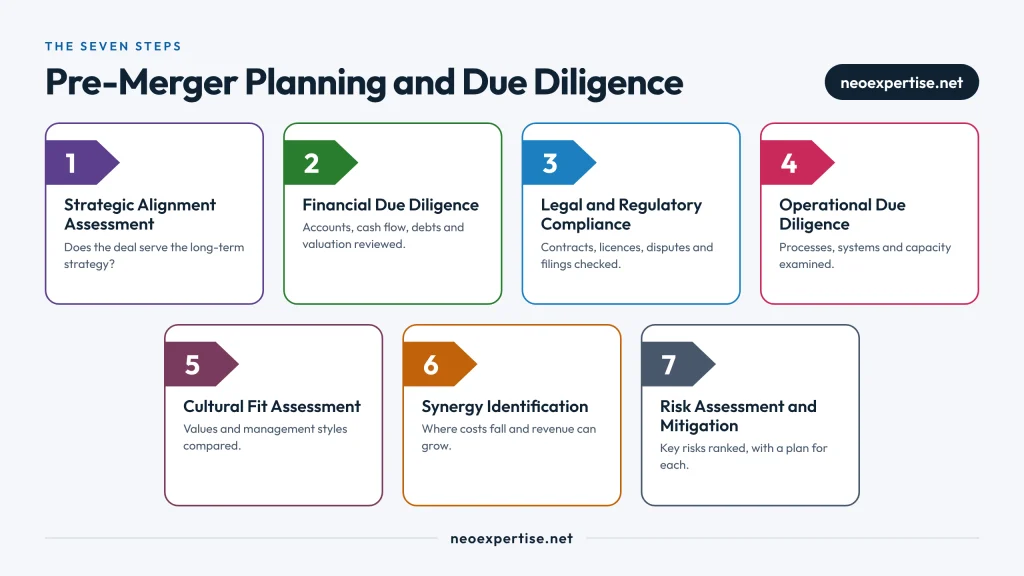
2. Pre-Merger Planning and Due Diligence
1. Assessing strategic alignment:
Perspective: Before embarking on a merger or acquisition, it is important to assess the strategic fit between the two organizations. This includes evaluating their long-term goals, market positioning and shared vision.
– Insight: Consider a technology startup (Company A) specializing in artificial intelligence solutions. Company A is considering a merger with an established software development firm (Company B). Due diligence needs to examine closely whether their technology roadmaps are aligned, whether synergies exist and whether the combined organization can create a competitive advantage.
2. Financial due diligence:
– Perspective: Financial health is a decisive factor. Both the quantitative and the qualitative aspects need to be scrutinized.
– Insight: Imagine that Company B has undisclosed debt or pending litigation. Failing to uncover this during due diligence could lead to surprises after the merger. A detailed financial audit and an analysis of historical financial statements and forecasts are essential. In addition, assessing working capital requirements ensures a smooth transition.
3. Legal and regulatory compliance:
Perspective: Legal risks can derail a merger. Understanding the regulatory requirements is paramount.
Insight: Suppose Company A (a pharmaceutical firm) plans to acquire Company B (a biotech startup). Due diligence must uncover any pending litigation, intellectual property disputes or regulatory non-compliance. For example, if Company B’s drug candidate infringes patent rights, this could jeopardize the merger.
4. Operational due diligence:
– Perspective: Operational efficiency affects post-merger success.
– Insight: Consider a retail merger in which Company A operates brick-and-mortar stores and Company B excels at e-commerce. Assessing supply chain logistics, inventory management and IT systems compatibility is critical. Failing to integrate them effectively can lead to customer dissatisfaction and lost revenue.
5. Assessing cultural fit:
– Perspective: Mergers involve people. Cultural fit affects employee morale and productivity.
Insight: Suppose Company A (a traditional, hierarchical organization) acquires Company B (a startup with a flat structure). Due diligence should examine cultural differences, communication styles and approaches to leadership. A cultural mismatch can lead to talent attrition and hinder collaboration.
6. Identifying synergies:
– Perspective: Synergies drive value creation.
– Insight: Imagine a merger between Company A (a telecommunications provider) and Company B (a content streaming platform). Identifying synergies, such as cross-selling services, shared infrastructure or joint marketing efforts, boosts profitability. Due diligence should quantify these synergies and assess how achievable they are.
7. Risk assessment and mitigation:
Perspective: Every merger carries inherent risks.
Insight: Suppose Company A acquires Company B in a highly competitive industry. Due diligence should identify the risks (for example, customer churn or technological obsolescence) and develop strategies to mitigate them. For instance, retaining key talent after the merger can reduce operational disruption.
In short, pre-merger planning and due diligence form the foundation of successful corporate integration. By carefully examining strategic alignment, financial health, legal compliance, operations, culture, synergies and risks, organizations can navigate the complexities of mergers and acquisitions effectively. Remember that well-executed due diligence lays the groundwork for a smooth and prosperous post-merger journey.
3. Cultural Integration Strategies
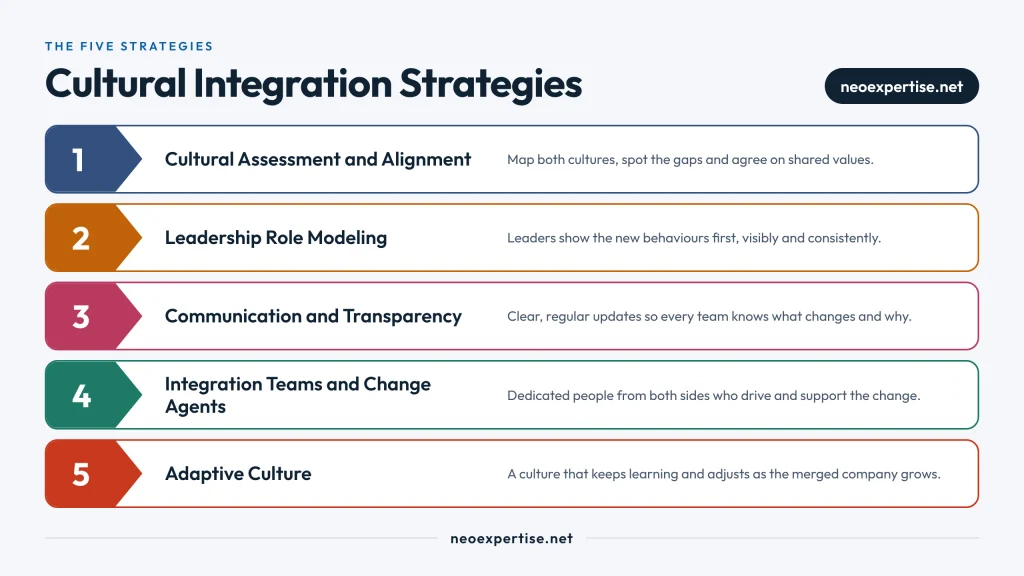
1. Cultural assessment and alignment:
Nuance: Before beginning integration, companies should carry out a thorough cultural assessment. This means understanding the existing organizational cultures and identifying similarities, differences and potential areas of conflict.
– Insights:
– Example 1: In the Disney–Pixar merger, both companies recognized the importance of creativity and innovation. They brought their cultures together by emphasizing collaboration, creative freedom and storytelling.
– Example 2: When Microsoft acquired LinkedIn, it assessed cultural fit by focusing on shared values such as customer centricity and continuous learning.
2. Leadership role modeling:
– Nuance: Leaders play a pivotal role in shaping organizational culture, and their behavior sets the tone for employees. During integration, leaders must model the desired cultural attributes.
– Insights:
– Example 1: In the Daimler-Benz–Chrysler merger, misaligned leadership led to culture clashes. The hierarchical German culture was at odds with Chrysler’s more informal approach. Clear role modeling could have eased the situation.
Example 2: IBM successfully integrated Red Hat by championing open-source values. IBM CEO Arvind Krishna took an active part in open-source events, demonstrating his commitment to the new culture.
3. Communication and transparency:
– Nuance: Effective communication is crucial. Employees need clarity about the changes, what is expected of them and the reasoning behind decisions.
– Insights:
– Example 1: During the Compaq–HP merger, unclear communication caused anxiety. Employees were uncertain about job security and their roles. Transparent town hall meetings and regular updates could have eased their concerns.
– Example 2: Nestlé acquired Nespresso and kept communication transparent. It explained the strategic fit, addressed concerns and highlighted shared growth opportunities.
4. Integration teams and change agents:
– Nuance: Dedicated integration teams and change agents drive cultural alignment. They bridge gaps, resolve issues and keep the integration process moving.
– Insights:
– Example 1: AOL and Time Warner ran into difficulties because of cultural tensions. A strong integration team could have proactively resolved the conflicts arising from their different media cultures.
– Example 2: Facebook’s acquisition of Instagram succeeded partly because Instagram’s co-founders acted as change agents, preserving the continuity of the startup culture.
5. Adaptive culture:
Nuance: Organizations must adapt to the new reality. Cultural rigidity can hold back progress, so flexibility and openness should be encouraged.
– Insights:
– Example 1: When Amazon acquired Whole Foods, it embraced Whole Foods’ organic culture. Rather than imposing its own methods, Amazon allowed room for adaptation.
Example 2: Cisco acquired WebEx and absorbed its culture of virtual collaboration, increasing Cisco’s overall agility.
In summary, cultural integration is not a one-size-fits-all process. It requires sensitivity, proactive planning and ongoing monitoring. By implementing these strategies, organizations can navigate the complex task of achieving cultural unity during mergers and acquisitions, creating a harmonious and productive environment for all stakeholders.
4. Operational Synergies and Efficiency
Operational synergies and efficiency play a critical role in corporate integration, particularly in the context of mergers and acquisitions. By seamlessly aligning and integrating the various aspects of their operations, organizations can boost productivity and maximize the value generated by the integration process.
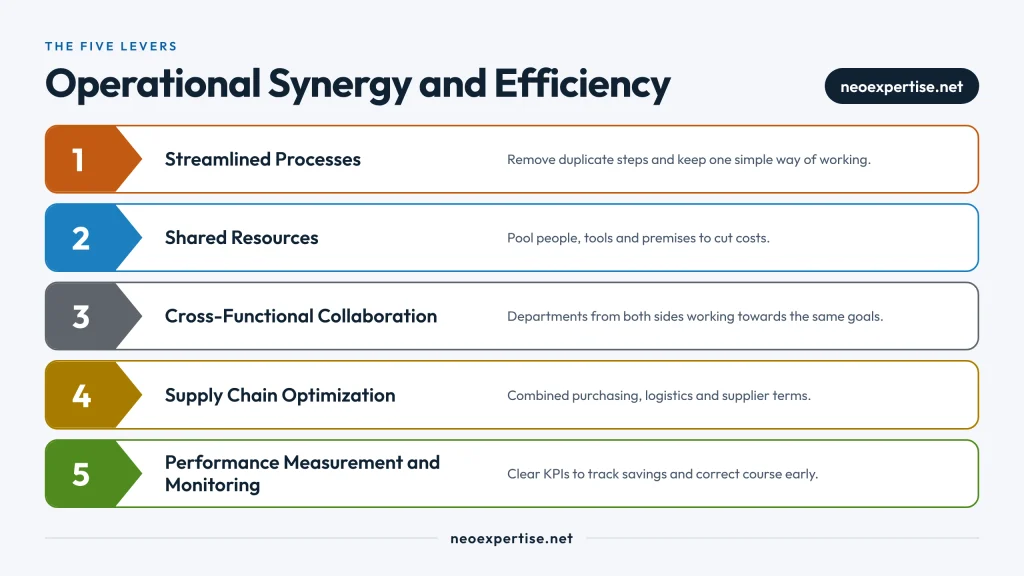
- Streamlined processes: One aspect of operational synergy is streamlining processes across the combined organizations. This involves identifying redundancies, eliminating inefficiencies and optimizing workflows. For example, by consolidating procurement processes or standardizing production methods, the combined company can achieve cost savings and improve its overall operational efficiency.
- Shared resources: Another key element of operational synergy is making effective use of shared resources. These may include shared facilities, technology infrastructure or even human resources. By leveraging shared resources, the combined company can reduce duplication, improve resource allocation and achieve economies of scale. For example, the merged organization might centralize its IT systems, resulting in better data management and lower costs.
- Cross-functional collaboration: Operational synergy also highlights the importance of cross-functional collaboration. By breaking down silos and encouraging collaboration between different departments or business units, the combined company can improve communication, knowledge sharing and decision-making. This can lead to faster problem-solving, better customer service and more innovation.
- Supply chain optimization: Operational synergy can extend to optimizing the combined company’s supply chain. By integrating supply chain processes such as procurement, production and distribution, the organization can gain greater visibility, shorten lead times and improve overall supply chain efficiency. For example, the combined company might consolidate its suppliers, negotiate more favorable contracts and implement advanced inventory management systems.
- Performance measurement and monitoring: Finally, operational synergy involves putting robust performance measurement and monitoring mechanisms in place. By defining key performance indicators (KPIs) and tracking them regularly, the combined company can assess how effective its integration efforts are and identify areas for improvement. This enables proactive decision-making and ensures that operational goals remain aligned with overall strategic objectives.
In short, operational synergies and efficiency are essential components of successful corporate integration. By streamlining processes, leveraging shared resources, encouraging cross-functional collaboration, optimizing the supply chain and implementing effective performance measurement, the combined company can achieve operational excellence and deliver sustainable growth.
5. Financial Integration and Reporting
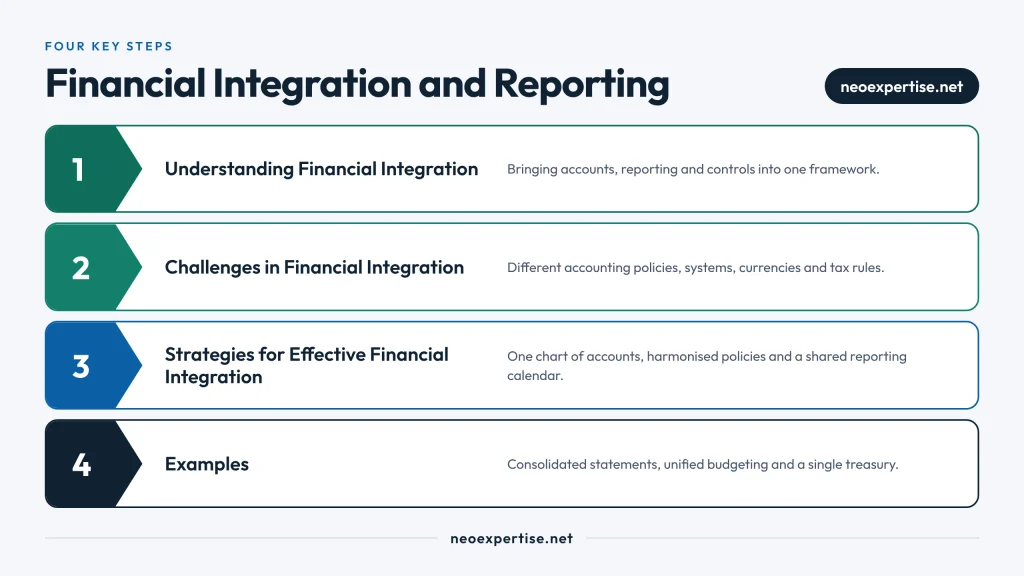
1. Understanding financial integration:
Definition: Financial integration is the process of combining the financial systems, processes and structures of two or more organizations following a merger or acquisition. It covers a range of elements, including accounting practices, financial reporting, tax compliance and treasury management.
Nuances:
Harmonizing accounting policies: When two companies merge, they often follow different accounting principles. Achieving consistency in financial reporting requires aligning accounting policies and applying revenue recognition and expense accounting uniformly.
Consolidating financial statements: After the merger, the combined company must prepare consolidated financial statements reflecting the financial position, results of operations and cash flows of the group as a whole. This involves eliminating intercompany transactions and adjusting for non-controlling interests.
Integrating financial systems: Integrating disparate financial systems (such as ERP, CRM and payroll systems) is critical. A seamless flow of data ensures accurate financial reporting and effective decision-making.
Tax implications: Mergers can have significant tax consequences. Companies must navigate tax legislation, transfer pricing and deferred tax assets and liabilities.
Treasury and cash management: Effective cash management involves centralizing treasury functions, optimizing working capital and managing liquidity across the combined organization.
2. Financial integration challenges:
– Cultural differences: The finance teams of the merging companies may have different working cultures, communication styles and priorities. Bridging these gaps is essential.
– Data harmonization: Consolidating financial data from different sources (legacy systems, spreadsheets, etc.) can be challenging. Data quality and accuracy are critical.
– Timing and sequencing: Deciding when to integrate financial processes (before closing, after closing or in phases) affects business continuity and stakeholder confidence.
– Change management: Employees must adapt to new financial processes, tools and reporting structures. Resistance to change can hamper integration efforts.
3. Strategies for effective financial integration:
– Early planning: Begin planning financial integration during due diligence. Identify synergies, risks and integration priorities.
– Cross-functional teams: Set up multidisciplinary teams (finance, IT, legal, etc.) to drive the integration. Collaboration is key.
– Phased approach: Prioritize critical areas (such as financial systems and the chart of accounts) and introduce changes gradually.
Communication: Transparent communication with stakeholders (employees, investors, regulators) builds trust.
Post-integration audit: Regularly assess the progress of financial integration and adjust strategies as needed.
4. Examples:
– Example: Following the merger of Company A (a technology startup) and Company B (a traditional manufacturing firm), their finance teams worked together to harmonize accounting policies. They adopted Company A’s revenue recognition practices and aligned their expense classifications.
Best practice: After acquiring ABC Ltd, XYZ Corporation took a phased approach. It integrated the payroll systems first, followed by the financial reporting tools. This minimized disruption and ensured accurate financial data.
In short, successful financial integration and robust reporting mechanisms are essential to realizing the full potential of mergers and acquisitions. Organizations that navigate these complexities strategically can achieve synergies, improve financial performance and create value for stakeholders.
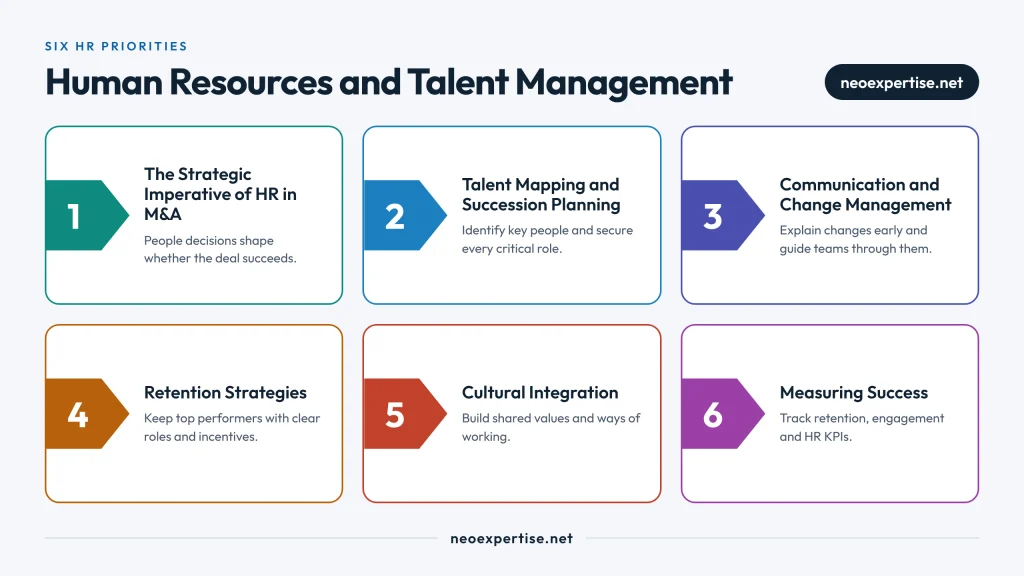
6. HR and Talent Management
1. The strategic HR imperative in mergers and acquisitions:
Context matters: When two organizations merge, or one acquires the other, they combine not only their financial assets but also their human capital. HR becomes the bridge between strategic vision and execution. It is not just about headcount; it is about bringing together people, cultures and capabilities.
– Integration challenges: HR faces a range of challenges:
– Culture clash: Different organizational cultures collide. Picture a tech startup merging with a traditional manufacturing company. HR must facilitate cultural integration by highlighting shared values while respecting diversity.
– Retention risks: Key talent may jump ship out of uncertainty or dissatisfaction. HR must identify flight risks and develop employee retention strategies.
– Skills gaps: Mergers and acquisitions often expose skills gaps. HR must assess competencies, identify training needs and close those gaps.
– Example: When Amazon acquired Whole Foods, HR played a key role in integrating two very different cultures. It focused on preserving Whole Foods’ commitment to organic and sustainable principles while drawing on Amazon’s operational excellence.
2. Talent mapping and succession planning:
– Talent mapping: HR carries out talent due diligence. Who are the star performers, the solid performers and the underperformers? Which roles are critical? What skills will future growth require?
Succession planning: HR identifies potential successors for key positions and builds a talent pipeline, ensuring continuity even if top leaders leave.
– Example: When Microsoft acquired LinkedIn, HR mapped LinkedIn’s talent pipeline. It identified high-potential employees and ensured a smooth transition after the acquisition.
3. Communication and change management:
Transparent communication: HR communicates openly about the M&A process, addressing fears and uncertainty. It manages expectations and provides clarity.
– Change champions: HR identifies change champions within the organization. These influencers help others embrace the transformation.
– Example: During Disney’s acquisition of Pixar, HR encouraged open dialogue, with a particular focus on collaborative storytelling and creativity.
4. Retention strategies:
– Golden handcuffs: HR designs retention packages (stock options, bonuses and deferred compensation) to keep critical talent on board.
– Career paths: HR shows employees how their roles fit the new organization’s vision. Clear career paths reduce anxiety.
– Example: When Facebook acquired Instagram, HR made sure Instagram’s founders stayed on by aligning their vision with Facebook’s long-term goals.
5. Cultural integration:
– Aligning values: HR fosters dialogue around shared values, celebrating diversity while building a unified culture.
– Social events: HR organizes team-building activities, workshops and cross-functional events.
– Example: When Vodafone merged with Idea Cellular, HR ran cultural exchange programs that blended British efficiency with Indian warmth.
6. Measuring success:
– Metrics matter: HR tracks key performance indicators (KPIs). Are employees engaged? Is turnover within acceptable limits? Are critical roles filled?
– Feedback loops: Regular employee feedback helps HR refine its strategies.
– Example: After AT&T acquired Time Warner, HR monitored employee satisfaction and adjusted policies based on the feedback.
In summary, HR and talent management are not merely administrative functions during mergers and acquisitions; they are strategic tools. By navigating the complexities, HR ensures that the human side of integration aligns smoothly with the financial and operational aspects. Remember, it is not just about the numbers; it is about nurturing the heart and soul of the new enterprise.
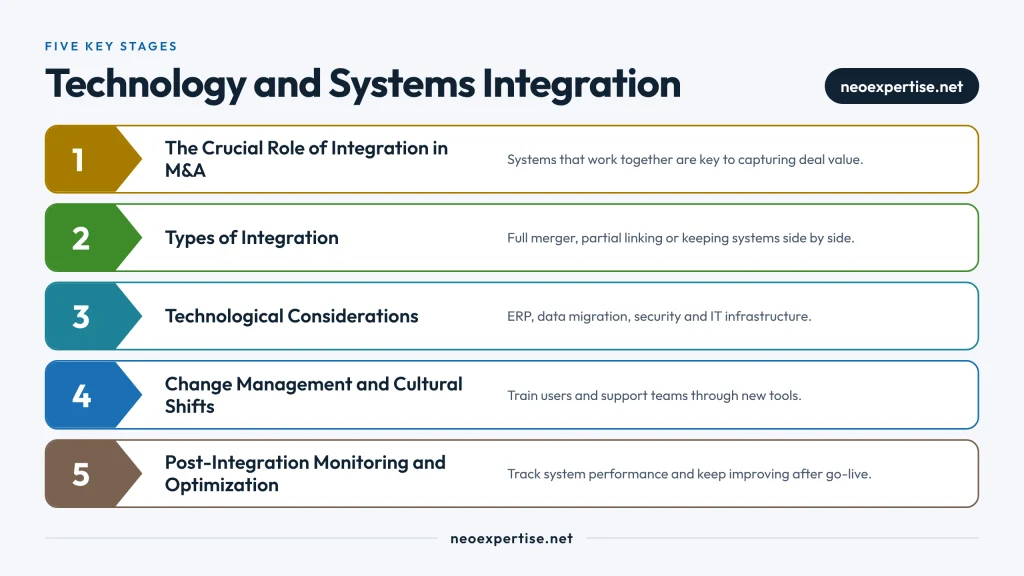
7. Technology and Systems Integration
1. The critical role of integration in mergers and acquisitions:
– Why integration matters: When two companies merge, they combine not only their physical assets and human resources but also their digital ecosystems. Effective integration ensures that the newly formed organization can operate seamlessly, avoid duplication and capture synergies.
Challenges and risks: Technology integration is no walk in the park. Legacy systems, incompatible software and differing data standards can lead to bottlenecks, data loss and operational disruption.
– Example: Picture a pharmaceutical company acquiring a biotech startup. The challenge is to integrate the startup’s cutting-edge research data with the company’s legacy databases. Ensuring data consistency and accessibility becomes paramount.
2. Types of integration:
– Horizontal integration: This involves combining similar functions or business units across companies, for example merging two sales teams or integrating supply chain processes.
– Vertical integration: This focuses on integrating different stages of the value chain. A manufacturer acquiring its supplier or distributor is an example of vertical integration.
– Example: A retail giant acquires a food delivery app. Integration involves connecting the app’s ordering system with the retailer’s inventory management and logistics systems.
3. Technology considerations:
Data harmonization: Standardizing data formats, terminology and coding structures is essential. Otherwise, you end up with a Tower of Babel in which systems speak different languages.
APIs and middleware: Application programming interfaces (APIs) and middleware act as translators between systems, enabling seamless communication and data exchange.
– Cloud adoption: Moving to the cloud offers scalability, flexibility and cost savings. However, choosing the right cloud provider and ensuring data security are critical.
– Example: A financial services company acquires a fintech startup. They integrate their customer databases through APIs, keeping accounts synchronized in real time.
4. Change management and cultural shifts:
– User adoption: Employees must adapt to new tools and processes. Training programs, clear communication and user-friendly interfaces are vital.
– Cultural fit: Each organization has its own working culture. Bridging the gap takes leadership commitment, shared values and patience.
– Example: After a merger, two tech companies consolidate their project management tools. The change management team runs workshops highlighting the benefits of a single system.
5. Post-integration monitoring and optimization:
– KPIs and metrics: Tracking key performance indicators (KPIs) helps gauge the success of the integration. Are response times faster? Is data accuracy improving?
Continuous improvement: Integration is not a one-off event. Regular assessments and adjustments are needed.
– Example: An e-commerce company acquires a logistics firm. It monitors order fulfillment times, warehouse efficiency and customer satisfaction scores to fine-tune its integrated systems.
In summary, successful technology and systems integration during mergers and acquisitions requires a delicate balance of strategy, execution and adaptability. It is not just about connecting the wires; it is about weaving a digital tapestry that strengthens the fabric of the business as a whole.
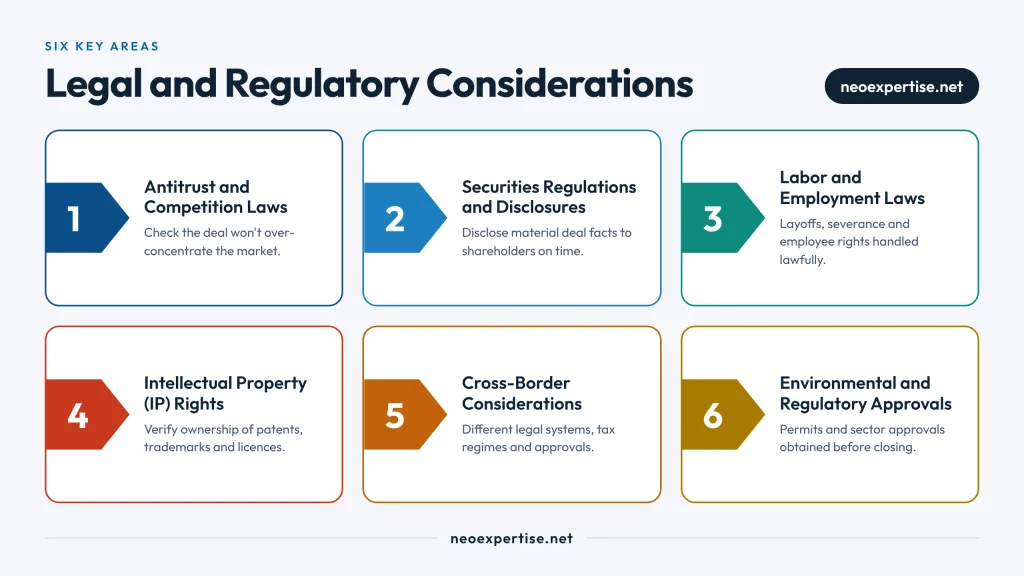
8. Legal and Regulatory Considerations
Here we explore the many facets of legal issues, drawing on the views of legal experts and practitioners as well as historical cases. Buckle up as we set off on this journey:
1. Antitrust and competition law:
Nuance: Antitrust laws are designed to promote fair competition and prevent monopolistic practices. They vary across jurisdictions: the United States has the Sherman Act, the Clayton Act and the Federal Trade Commission Act, while the European Union applies the EU Merger Regulation.
– Insight: Companies must assess whether their proposed merger or acquisition would lead to excessive market concentration. Failure to comply with antitrust law can result in heavy fines or even the unwinding of the deal.
– Example: During the AT&T–Time Warner merger, the US Department of Justice raised concerns about potential harm to consumers. The companies had to defend their case in court, highlighting the deal’s benefits for competition.
2. Securities regulations and disclosure:
Nuance: Public companies must comply with strict disclosure requirements. Material information relating to M&A transactions must be communicated to shareholders in a timely manner.
– Insight: Transparency builds investor confidence. Failure to disclose material facts can lead to litigation, affecting share prices and reputation.
Example: After Hewlett-Packard (HP) acquired Autonomy, HP alleged accounting irregularities. The legal battle that followed underscored the importance of due diligence and accurate disclosure.
3. Labor and employment law:
– Nuance: M&A transactions affect employees. Employment law governs matters such as layoffs, severance pay and employee rights.
– Insight: Companies must take into account employee integration, cultural differences and potential labor disputes.
Example: During the Daimler-Chrysler merger, clashes between German and American labor cultures created difficulties in harmonizing employment practices.
4. Intellectual property (IP) rights:
Nuance: IP assets (patents, trademarks, copyrights) play a crucial role in mergers and acquisitions. Due diligence must assess IP ownership, licensing agreements and potential infringement risks.
– Insight: Mishandling IP can lead to costly lawsuits or the loss of competitive advantage.
– Example: In Google’s acquisition of Motorola Mobility, the IP portfolio was a key factor. Google secured patents for its Android ecosystem but faced legal battles with competitors.
5. Cross-border considerations:
– Nuance: Global mergers and acquisitions involve different legal systems, tax regimes and cultural norms.
– Insight: Harmonizing legal compliance across borders requires expert advice and flexibility.
Example: AB InBev’s acquisition of SABMiller required approval from regulators in many countries because of the company’s global footprint.
6. Environmental and regulatory approvals:
– Nuance: M&A transactions often have environmental impacts (such as pollution and resource use). Regulatory approvals are required in certain industries (such as energy and mining).
– Insight: Failure to obtain approval can halt a deal or result in penalties.
Example: ExxonMobil’s acquisition of XTO Energy came under close scrutiny over its environmental impact assessment.
In summary, legal and regulatory considerations are the foundation on which successful M&A deals are built. Companies should engage legal counsel early, conduct thorough due diligence and anticipate potential pitfalls. As the saying goes, “In M&A, the devil is in the details.”
Legal and Regulatory Considerations – Corporate Integration. Mergers and Acquisitions: A Guide to Corporate Integration Strategies
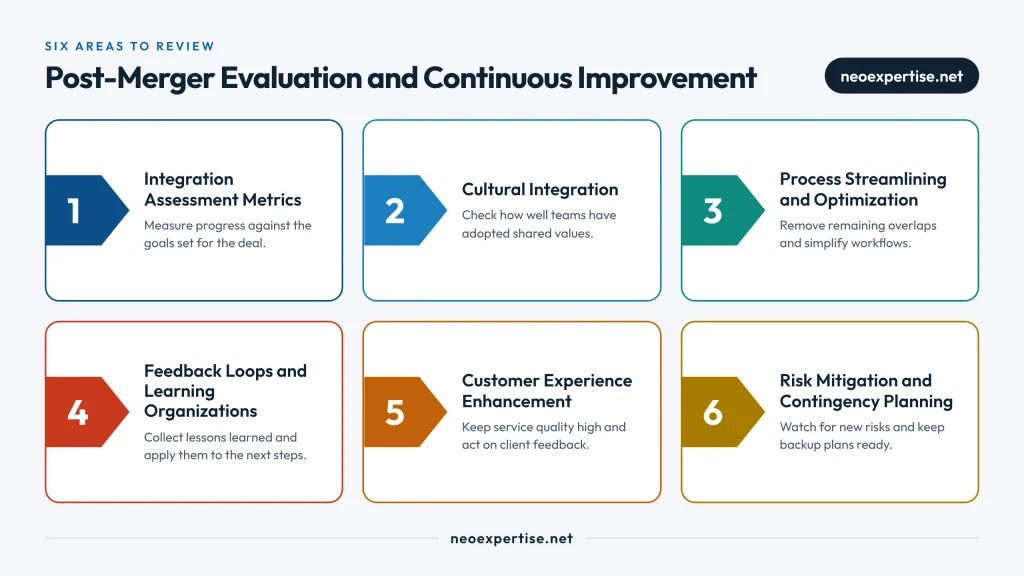
9. Post-Merger Evaluation and Continuous Improvement
In the dynamic world of mergers and acquisitions (M&A), the post-merger phase is a critical juncture that often determines the long-term success or failure of the integration process. While pre-merger due diligence and negotiations receive considerable attention, it is in the post-merger period that organizations face the enormous task of aligning disparate cultures, systems and processes. In this section, we take a closer look at the nuances of post-merger evaluation and continuous improvement, shedding light on the many challenges and opportunities that arise.
1. Integration evaluation metrics:
Organizations must establish clear evaluation metrics to assess how effective the integration process is. These metrics go beyond financial performance indicators to cover cultural fit, employee morale, customer satisfaction and operational efficiency.
– Example: Consider a pharmaceutical company that acquires a biotech startup. Beyond financial synergies, integration success should be measured by smooth collaboration between research teams, joint product development and the retention of key talent.
2. Cultural integration:
Culture clashes are common after a merger, as employees from different organizations come together. Effective cultural integration involves developing a shared identity, values and norms.
– Example: When a tech giant acquires a nimble startup, bridging the gap between the startup’s agile decision-making and corporate bureaucracy becomes crucial. Regular town hall meetings, cross-functional workshops and mentoring programs can help achieve cultural alignment.
3. Process simplification and optimization:
Mergers and acquisitions often result in duplicated processes and systems. Organizations must critically evaluate existing workflows, identify inefficiencies and streamline operations.
– Example: Following a telecom merger, the combined company ran into customer service problems because of duplicate call centers. By centralizing customer support and deploying AI-powered chatbots, it reduced both response times and costs.
4. Feedback loops and learning organizations:
Continuous improvement depends on feedback. Put mechanisms in place that allow employees to share ideas, lessons learned and best practices.
– Example: A financial services company acquiring a fintech startup might set up cross-functional working groups to identify bottlenecks. Regular retrospectives and knowledge-sharing sessions help build a learning culture.
5. Enhancing the customer experience:
Mergers and acquisitions should improve the customer experience, not damage it. Assess how the merger will affect customers, address pain points and keep communication transparent.
– Example: When an e-commerce platform acquires a logistics company, seamless order tracking and faster delivery become critical. Regular surveys and customer feedback help fine-tune the process.
6. Risk mitigation and contingency planning:
Unforeseen problems can arise after a merger. Organizations must have robust contingency plans in place to deal with disruptions promptly.
– Example: A retail chain merging with another chain experiences supply chain disruptions as a result of supplier consolidation. Having alternative suppliers and backup logistics partners reduces the risks.
In summary, post-merger evaluation and continuous improvement call for a holistic approach that takes into account financial, cultural, operational and customer-focused aspects. Organizations that navigate this phase skillfully not only achieve synergies but also lay the foundation for the sustainable growth of the combined organization.
Remember, successful integration is not a one-off event; it is an ongoing journey toward excellence.

Brahim Rami | Member of institute of chartered accountants in Morocco
He is a CPA and tax advisor, founder of NeoExpertise.net, a Legal and Tax firm helping foreign companies with business setup, due diligence, payroll, and tax compliance in Morocco and Africa.