

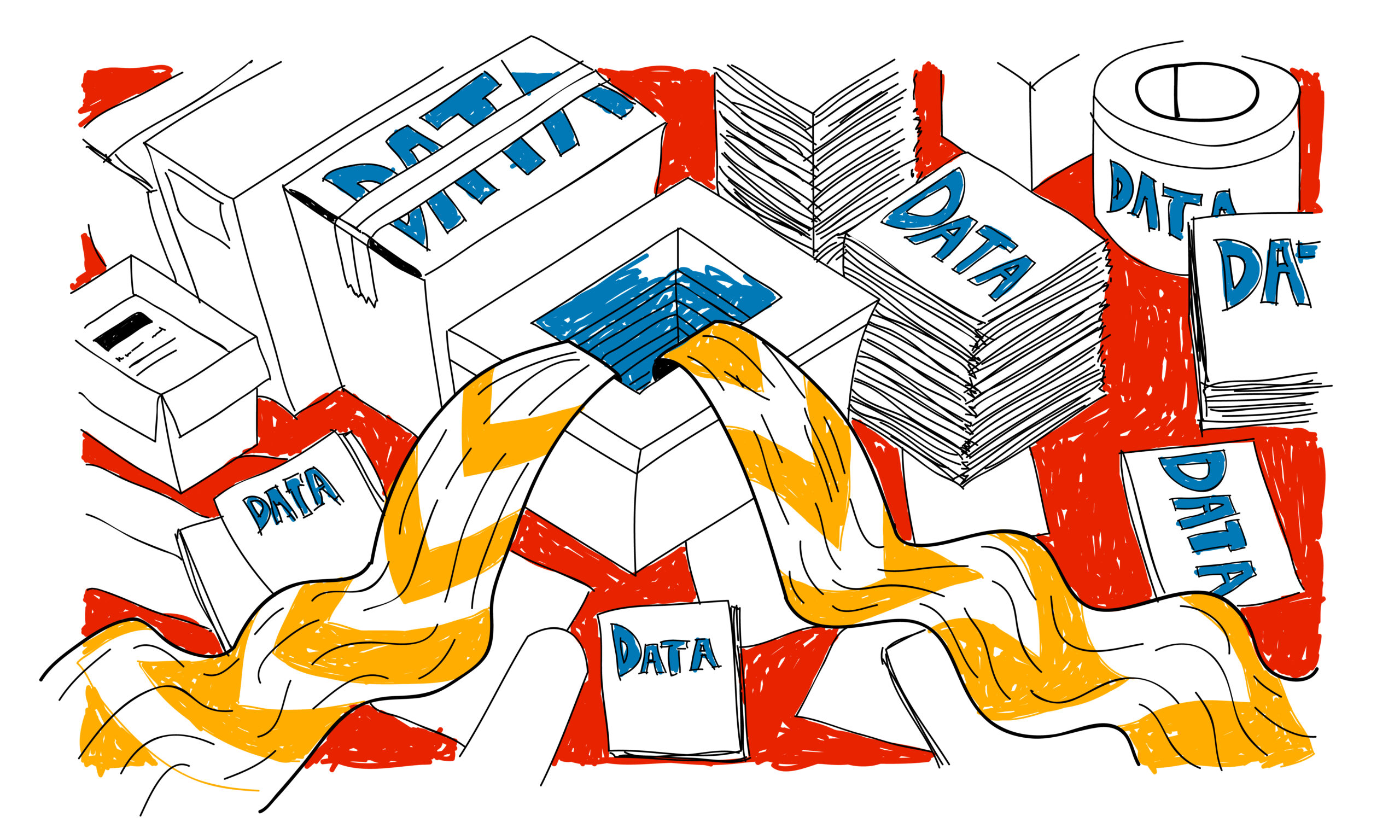
Most Moroccan SMEs do not have a data problem. They have a dirty data problem — and they do not know it. A 2021 Gartner study found that poor data quality costs organizations an average of $12.9 million per year. For a Moroccan SME operating on thin margins, even a fraction of that loss can erase an entire quarter’s profit.
What is dirty data?
Dirty data is any data that is inaccurate, incomplete, inconsistent, duplicated, or formatted in a way that prevents reliable analysis. Common examples include misspelled customer names, duplicate invoice records, missing phone numbers, and dates stored in mixed formats — for example, “12/05/2024” meaning different things in French versus American date conventions.
Clean data means every record is accurate, complete, consistent, and structured the same way across all systems.Copy
The scale of the problem in Morocco’s SME sector
According to Morocco’s High Commission for Planning (HCP), SMEs represent 93% of all registered companies in Morocco and contribute approximately 38% of GDP. Yet the vast majority operate without a formal data management policy.
A 2022 Experian survey across emerging markets found that 76% of companies reported inaccurate data directly undermined their ability to serve customers. In Morocco’s context — where many SMEs still rely on hybrid paper-and-digital workflows — that figure is likely higher.
BI tools are only as good as the data fed into them. No platform — not Power BI, not Tableau — can generate reliable insights from dirty input data.
5 root causes of dirty data in Moroccan SMEs
1 Over-reliance on Excel and manual entry
Excel remains the dominant data tool for Moroccan SMEs. While flexible, it is also fragile: no built-in validation, no access control, no audit trail. One employee enters “Casa,” another enters “Casablanca.” One writes “0661-123456,” another writes “+212661123456.” Over months, these small inconsistencies compound into datasets that cannot be merged or analyzed reliably.
“In Morocco, Excel is not a data tool. It is a document that pretends to be a database.”
2 Multilingual data chaos — Arabic, French, and Darija
Morocco operates across three primary languages in business contexts: Modern Standard Arabic, French, and Moroccan Darija. Many SMEs switch languages mid-process — a CRM record created in French, a support ticket written in Darija, an invoice exported in Arabic. This creates character encoding errors, inconsistent field values, and duplicate records that appear different but represent the same entity.
3 Fragmented systems with no integration
A typical Moroccan SME in 2026 uses four to six disconnected software tools: a local accounting package, a separate CRM or WhatsApp-based client system, Excel for reporting, and often a physical register for backup. None of these systems talk to each other. The result is data silos — isolated pools of information that contradict each other and cannot be consolidated without significant manual effort.
4 No data governance policy
Among Moroccan SMEs, fewer than 1 in 10 has a documented data governance policy. Without governance, there is no single owner responsible for data quality, no one validates what gets entered into systems, and errors accumulate silently for months or years before anyone notices.
5 Skills gap and budget constraints
Hiring a dedicated data analyst is beyond the budget of most Moroccan SMEs. Data management therefore falls to accounting staff or office administrators who were never trained for it. According to Morocco’s Ministry of Digital Transition, the country faces a shortage of 15,000 to 20,000 qualified data professionals — a gap that disproportionately impacts SMEs.
The real cost of dirty data for Moroccan businesses
“Dirty data does not just slow down analysis. It makes every business decision less reliable than a coin flip.”
The real cost of dirty data for Moroccan businesses
“Dirty data does not just slow down analysis. It makes every business decision less reliable than a coin flip.”
- Lost revenue: Duplicate or missing customer records lead to missed follow-ups and lost sales → 5–15% of revenue leakage
- Wasted staff time: Knowledge workers spend up to 50% of their time finding, fixing, and verifying data → 2–4 hours per employee per day
- Poor decisions: Management reports built on dirty data lead to wrong pricing, inventory, and staffing decisions
- Compliance risk: Morocco’s Law 09-08 (CNDP) requires accurate personal data — dirty records create direct legal exposure
- Failed BI projects: BI tools produce worthless outputs when source data is unreliable
How to fix dirty data: a 5-step action plan
Step 1 Run a data audit
Before fixing anything, measure the problem. Export your customer or supplier list to Excel and run a duplicate check using the built-in “Remove Duplicates” function. Count blank cells in critical fields such as phone number, email, and city. This baseline tells you exactly how severe the problem is before you invest a single dirham in fixing it.
Step 2 Define data standards before more data enters
Every field in every system needs a written rule. City names: always “Casablanca” — never “Casa,” “casa,” or “CASA.” Phone format: always +212XXXXXXXXX. Dates: always YYYY-MM-DD (ISO 8601). Names: first name and last name in separate fields. Post these rules where data entry happens and make them non-negotiable.
Step 3 Add validation at the point of entry
Once standards are defined, enforce them technically. In Excel, use data validation rules — dropdown lists, date pickers, and number ranges. In a CRM or ERP, require mandatory fields before a record can be saved. It is 10 times cheaper to prevent bad data from entering than to clean it after the fact.
Step 4 Centralize data into one system
The single most effective structural fix is replacing fragmented tools with one source of truth. Cloud-based tools like Airtable, HubSpot CRM (free tier), or Microsoft Dataverse are accessible to SMEs with modest budgets. Once centralized, your data becomes connectable to Business Intelligence tools — the foundation for real, reliable analytics.
Step 5 Build a data culture — not just a data process
Sustainable clean data requires a two-hour training session for all staff who enter data, a designated “data owner” per department, and monthly spot-checks: pull 20 random records and audit them manually against your standards.
“Data quality is a habit, not a project. It requires the same discipline as financial controls.”
Conclusion: clean data is the foundation of business intelligence
Moroccan SMEs cannot compete in an increasingly data-driven economy with systems built on dirty, fragmented, and unvalidated data. The fix is not a massive IT overhaul — it is a series of deliberate, affordable steps: audit what you have, standardize how data enters, validate at the source, centralize into one system, and build a culture where data quality is everyone’s responsibility.
Clean data is not the end goal. It is the prerequisite for everything that follows — accurate reporting, reliable forecasting, and the kind of business intelligence that creates real competitive advantage in the Moroccan market.

Brahim Rami | Member of institute of chartered accountants in Morocco
He is a CPA and tax advisor, founder of NeoExpertise.net, a Legal and Tax firm helping foreign companies with business setup, due diligence, payroll, and tax compliance in Morocco and Africa.