
Morocco has emerged as one of the most attractive investment destinations in Africa and the Mediterranean region. Political stability, large-scale infrastructure, preferential trade agreements, and a new Investment Charter offering financial incentives of up to 30% have transformed the country into a strategic platform for foreign investors, not merely a local market.
This guide provides a complete, data-based overview of investing in Morocco in 2026, covering FDI statistics, priority sectors, incentives, cities, and strategic considerations. It is designed as a reference page for investors, analysts, consultants, and decision-makers.
Table of Contents
Why Invest in Morocco in 2026?
Morocco combines macroeconomic stability with a proactive investment policy aimed at attracting long-term private capital.
Key fundamentals include:
- Strategic location at the crossroads of Europe, Africa, and the Middle East
- Free trade agreements with the EU, USA, UK, and African markets
- Modern infrastructure (ports, highways, high-speed rail, energy)
- Strong institutional framework and investor protection
- Clear national objective: private investment to reach 65% of total investment by 2035
Morocco is increasingly used as a manufacturing, export, nearshoring, and regional headquarters base.
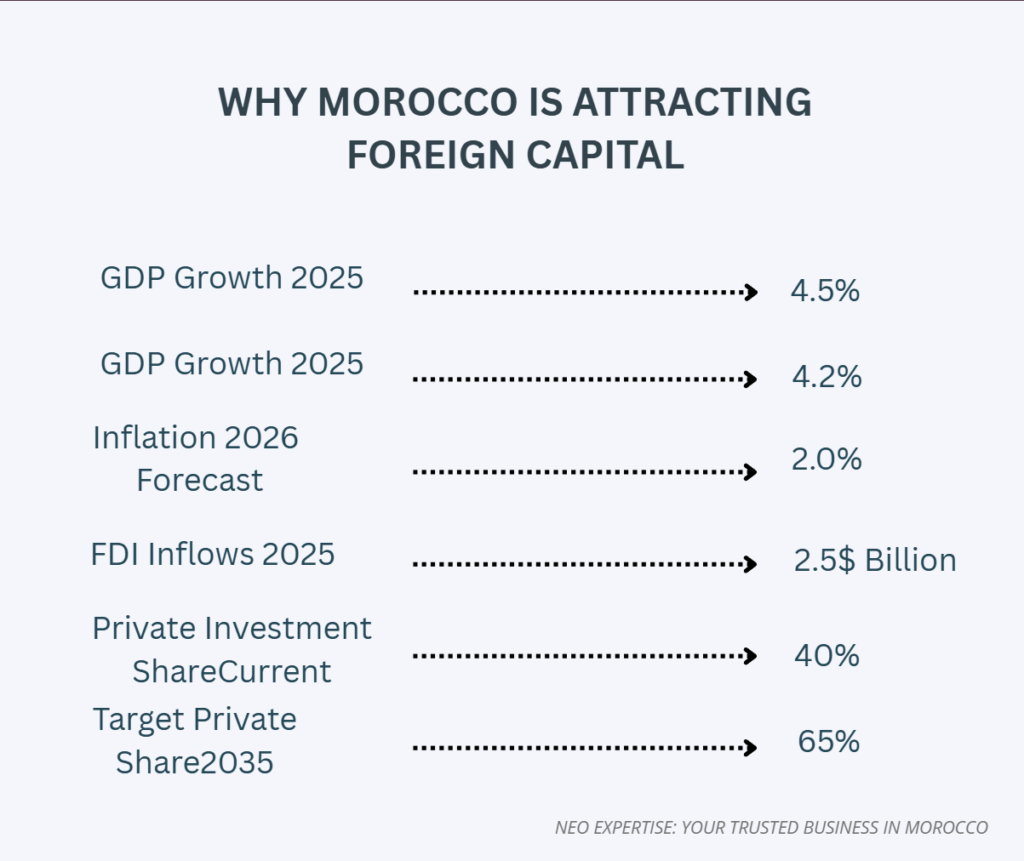
Interpretation
Morocco combines macroeconomic stability with a long-term investment strategy targeting private capital dominance, which is a decisive criterion for international investors.
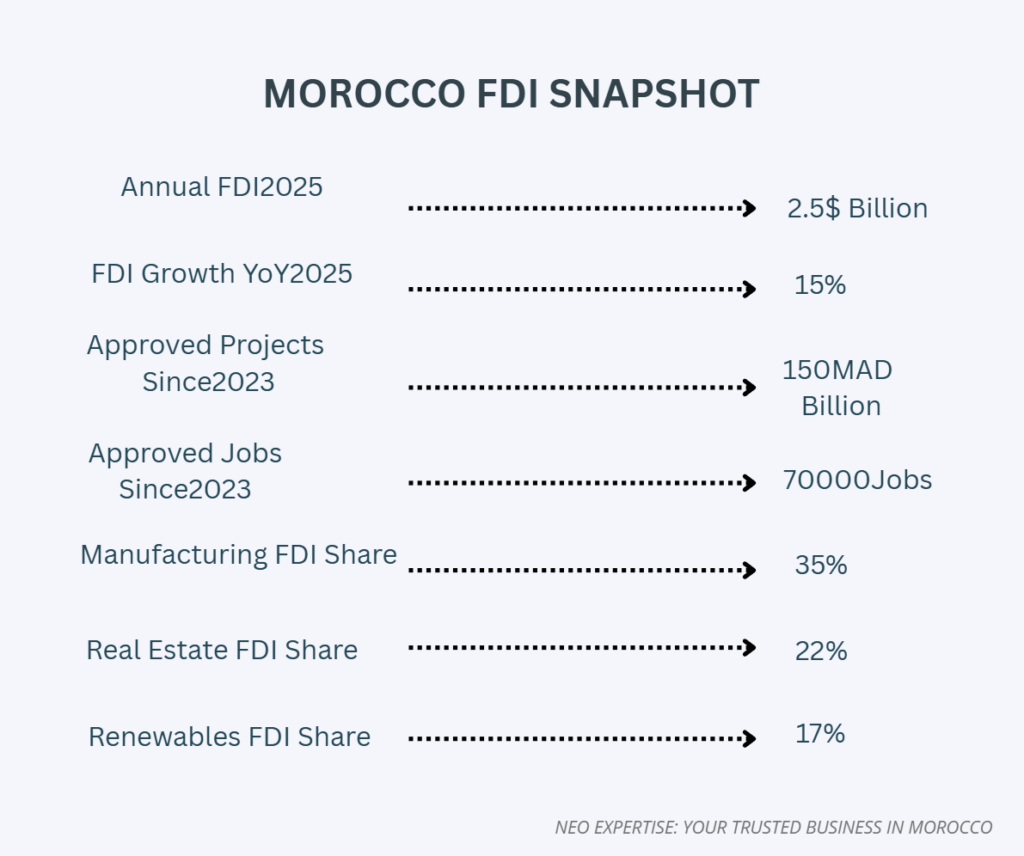
Investor takeaway
Morocco is shifting from public-led investment to private-capital-driven growth, a strong signal for institutional and strategic investors.
The New Investment Charter (2022–2026)
The Moroccan Investment Charter is the backbone of the country’s investment strategy.
Main advantages:
- Up to 30% subsidy on eligible investment costs
- Additional bonuses for:
- Job creation
- Strategic sectors
- Underdeveloped regions
- Green and sustainable projects
- Equal treatment between Moroccan and foreign investors
- Guaranteed repatriation of capital and profits
This framework makes Morocco one of the most incentive-friendly jurisdictions in the region.
Priority Investment Sectors in Morocco
Automotive & EV Supply Chain
Morocco is the leading automotive exporter in Africa, hosting global players and more than 250 suppliers. The ecosystem is expanding into electric vehicles, batteries, and high-value components.

Aerospace
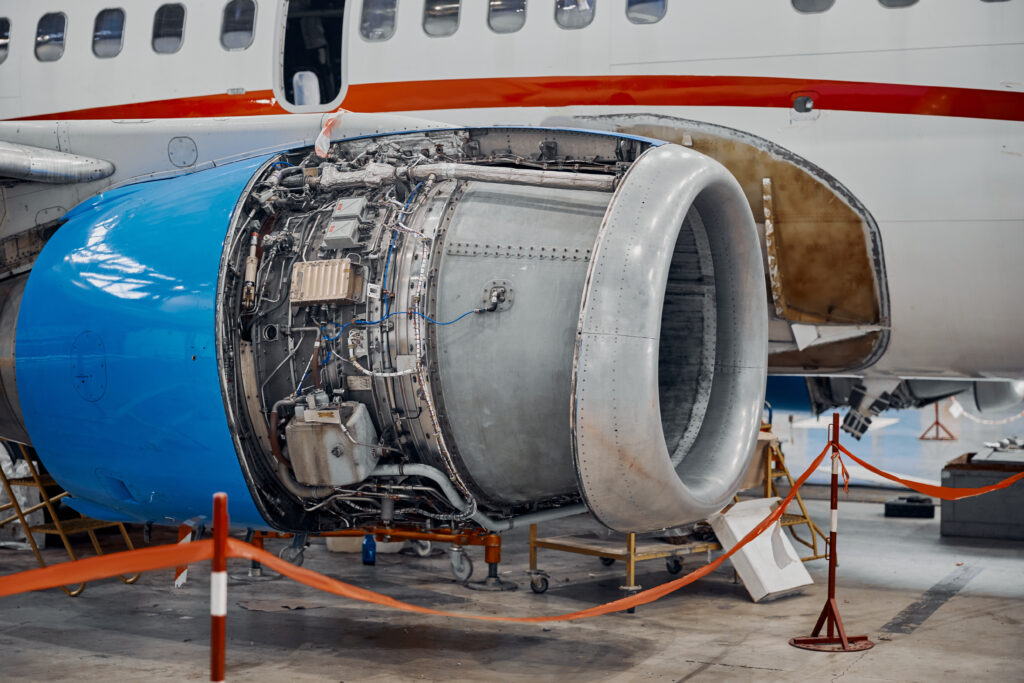
With specialized industrial zones and strong skills programs, Morocco is fully integrated into global aerospace supply chains.
Renewable Energy & Green Hydrogen
Over 40% of electricity capacity already comes from renewables, with ambitious targets for green hydrogen, solar, and wind manufacturing.

Agribusiness & Agri-Tech
Strong agricultural production combined with growing demand for processing, cold chain, packaging, and water-efficient technologies.

Digital, Outsourcing & Tech
Offshoring, IT services, SaaS, and digital platforms are explicitly prioritized under national strategies and benefit from tax incentives.

Tourism & Real Estate
Tourism is a major growth engine, supported by infrastructure upgrades and the 2030 World Cup. Net rental yields of 6–10% are achievable in prime locations.

Foreign Direct Investment (FDI) Breakdown by Sector
| Sector | Share of FDI | Key Drivers |
|---|---|---|
| Manufacturing (Auto, Aero) | 35–40% | Export hubs, EU access |
| Real Estate & Construction | 20–25% | Gulf capital, World Cup |
| Energy (Renewables, H₂) | 15–20% | Tax holidays, EU demand |
| Tourism & Leisure | 10–15% | Infrastructure upgrades |
| Digital & Outsourcing | 5–8% | Digital 2030 strategy |
| Agri-food & Aquaculture | ~5% | Subsidies up to 40% |
Best Cities to Invest in Morocco
Casablanca
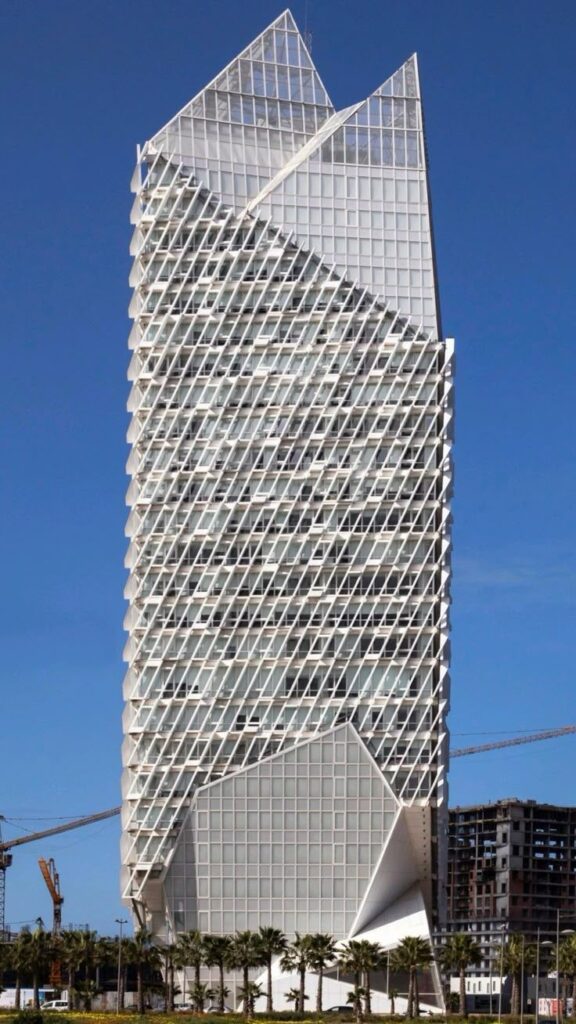
Economic and financial capital, home to Casablanca Finance City, ideal for headquarters, finance, and regional operations.
Tangier
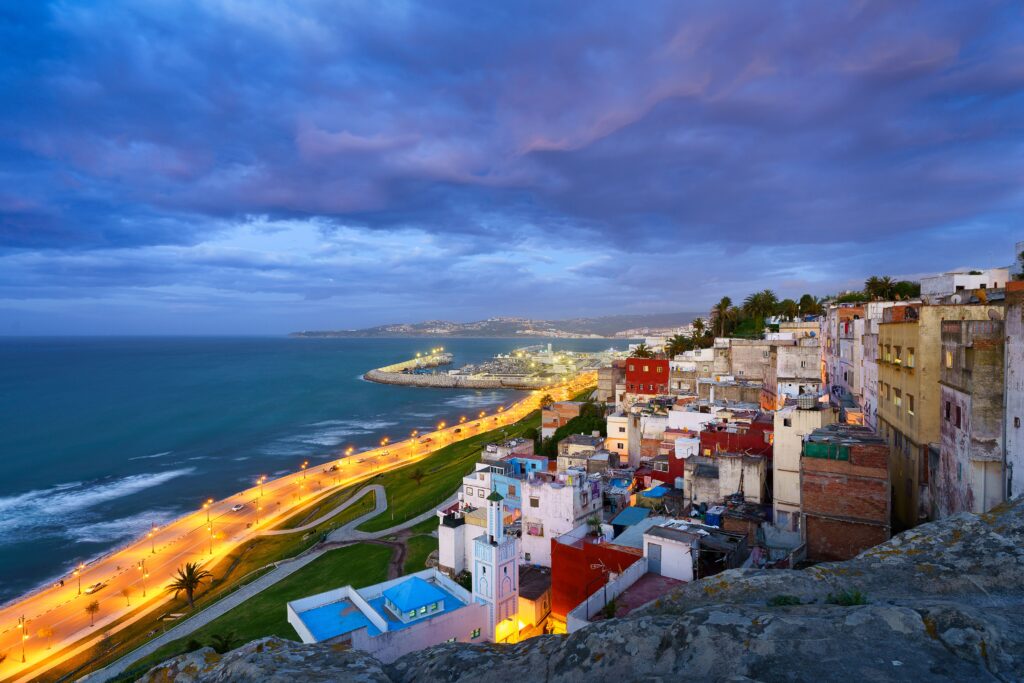
Logistics and industrial powerhouse thanks to Tanger Med Port, one of the largest ports in the Mediterranean.
Rabat – Kénitra
Strong in government-linked projects, digital services, and automotive clusters.
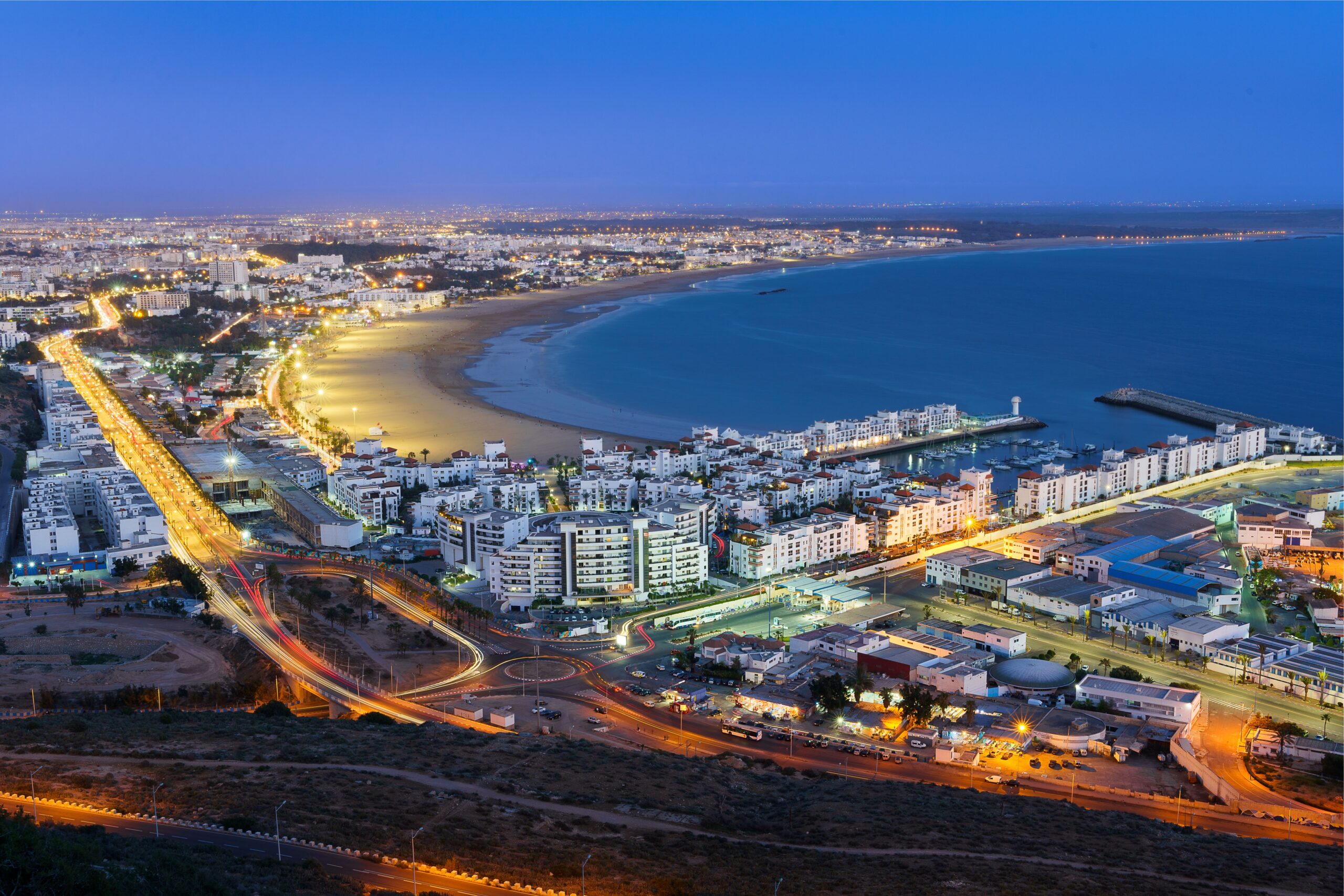
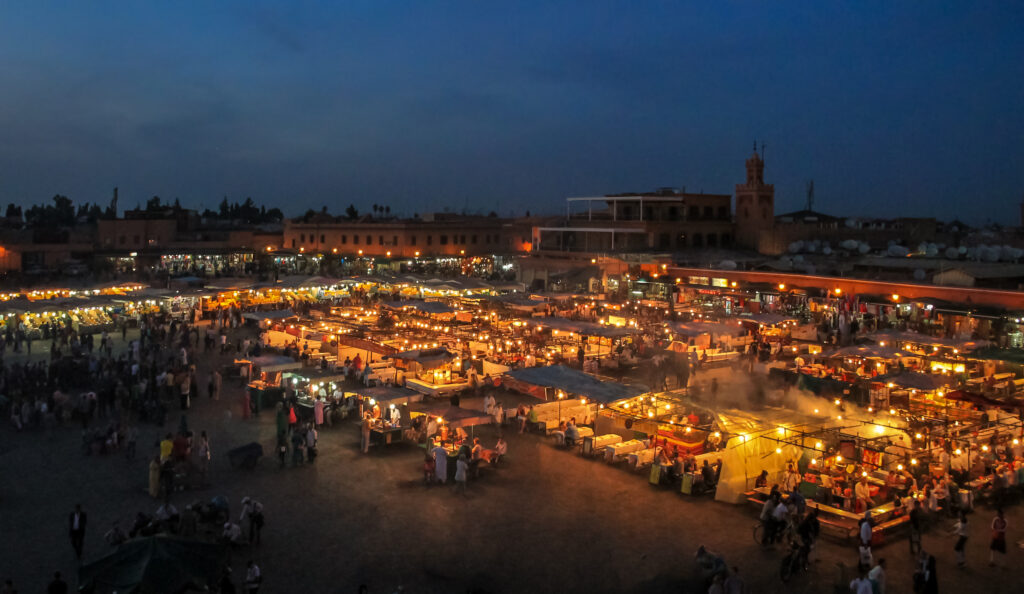
Marrakech & Agadir
Tourism-driven investment, hospitality, branded residences, and lifestyle real estate.
Best Moroccan Cities – Investment Logic Table
| City | Main Strength | Typical Yield / Advantage |
|---|---|---|
| Casablanca | HQ, finance, services | Regional control hub |
| Tangier | Industry & logistics | Export efficiency |
| Rabat–Kénitra | Automotive & digital | Institutional stability |
| Marrakech | Tourism & real estate | 6–10% rental yields |
| Agadir | Tourism & agribusiness | Lower entry cost |
Free Zones vs Industrial Zones
| Criteria | Free Zones | Industrial Zones |
|---|---|---|
| Corporate tax | 0–5 years exemption, then reduced rate | Standard rate with territorial bonuses |
| VAT & customs | Full exemptions | Limited exemptions |
| Best for | Export-oriented projects | Domestic or mixed markets |
| Ownership | 100% foreign | 100% foreign |
Choosing the right zone is a strategic decision that directly impacts profitability.
Legal Framework for Foreign Investors
Foreign investors can:
- Own 100% of companies in most sectors
- Freely transfer dividends, profits, and capital
- Operate through SARL, SA, branches, or holding structures
Restrictions exist only in a few strategic sectors (transport, fisheries, agricultural land ownership), while leasing and free-zone structures remain fully open.
Company creation is centralized through Regional Investment Centers (CRI), significantly reducing setup timelines.
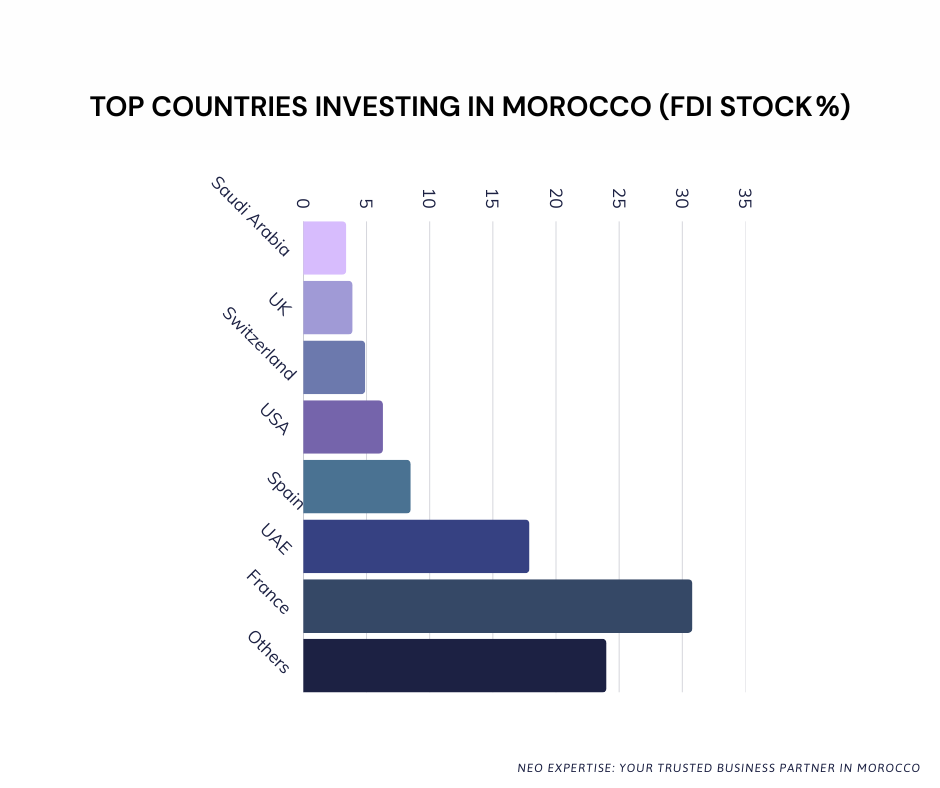
Insight:
Europe + Gulf account for ~80% of total FDI stock, while US & China are rising, especially in renewables and manufacturing.
Investing in Morocco and the 2030 World Cup
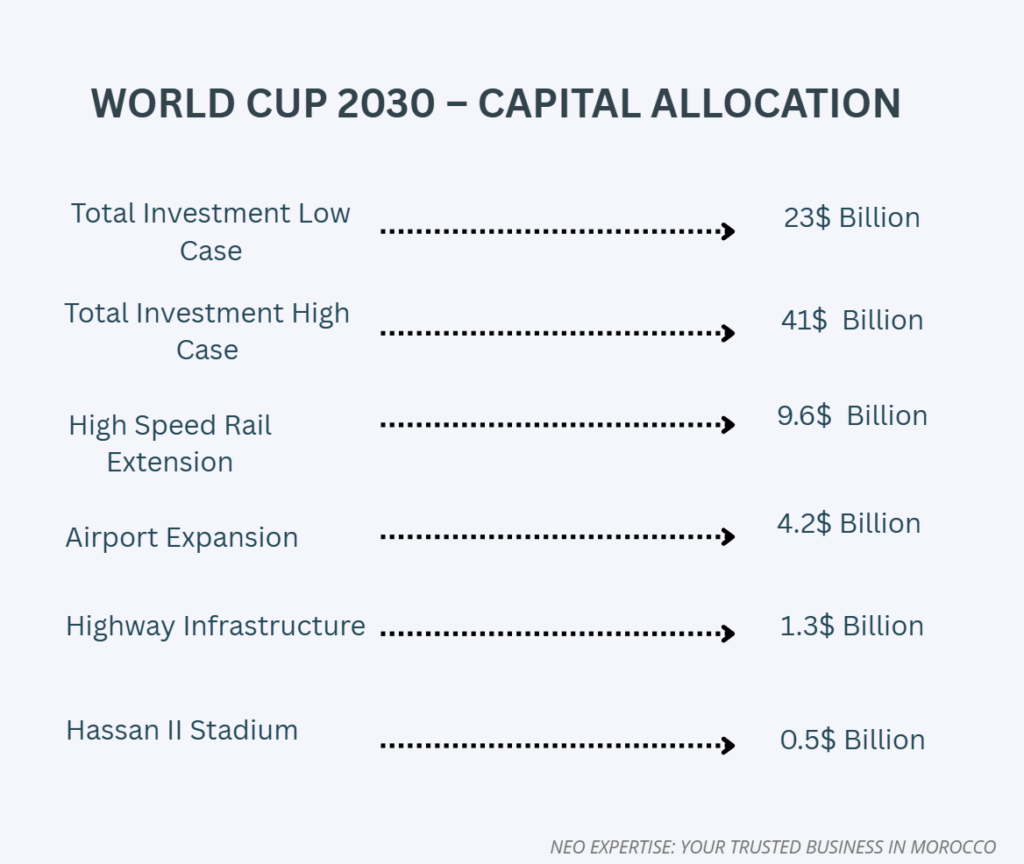
Morocco’s co-hosting of the 2030 FIFA World Cup is triggering tens of billions of dollars in infrastructure investment:
- Airports
- High-speed rail
- Stadiums
- Roads and logistics
- Hotels and urban development
This creates exceptional opportunities for construction, materials, logistics, hospitality, and real estate investors.
[World Cup 2030 – Capital Allocation Overview]
How to Start Investing in Morocco (Overview)
- Define sector, target market (export vs local), and budget
- Choose city and zone (Free Zone or Industrial Zone)
- Create a legal entity (SARL or SA)
- Register the foreign investment for repatriation rights
- Apply for Investment Charter incentives
- Launch operations with local tax, legal, and accounting compliance
Strategic Advice for Investors
- Align your project with priority sectors to maximize incentives
- Think export-first when possible to leverage trade agreements
- Use experienced local advisors for tax, legal, and zone negotiations
- Plan with a medium-term horizon (5–7 years) for real estate and infrastructure projects
Investment Incentives – Financial Impact (Simplified)
| Incentive Type | Value |
|---|---|
| Base investment subsidy | Up to 30% of eligible costs |
| Territorial bonus | Up to 15% |
| Sector bonus | +5% (renewables, digital, logistics) |
| Free Zone corporate tax | 0% (5 years) → reduced rate |
| VAT on imported equipment | Exempt (36 months) |
| Profit repatriation | 100% guaranteed |
Invest in Morocco: A Strategic Gateway
Morocco is no longer a “future opportunity” — it is already a platform for:
- Manufacturing
- Export
- Nearshoring
- Africa-focused expansion
- Sustainable and digital growth
If you are considering investing in Morocco, this page is your starting point — and each section can be explored in depth through dedicated guides.

Brahim Rami | Member of institute of chartered accountants in Morocco
He is a CPA and tax advisor, founder of NeoExpertise.net, a Legal and Tax firm helping foreign companies with business setup, due diligence, payroll, and tax compliance in Morocco and Africa.